



Hey there! As a supplier of water pipe gate valves, I often get asked this question: "Does a water pipe gate valve affect the water pressure in the pipe?" In this blog post, I'm gonna dive deep into this topic and give you all the details.
First things first, let's understand what a water pipe gate valve is. A gate valve is a type of valve that uses a gate or wedge to control the flow of fluid in a pipe. When the gate is fully open, the fluid can flow freely through the pipe. When the gate is closed, it blocks the flow completely. These valves are commonly used in water supply systems, industrial applications, and more. You can check out our High Temperature High Pressure Gate Valve and API ANSI Steel Gate Valve for some high - quality options.
So, does it affect water pressure? Well, the answer is yes, but it depends on a few factors.
When the Gate Valve is Fully Open
When a water pipe gate valve is fully open, it has minimal impact on the water pressure in the pipe. The gate is retracted fully into the valve body, creating a straight path for the water to flow. In an ideal situation, the water can flow through the valve just as if the valve wasn't there at all. The pressure drop across the fully - open gate valve is usually very small, often negligible in most water supply systems. This is because the cross - sectional area of the flow path through the valve is almost the same as that of the pipe.
However, in real - world scenarios, there might still be a tiny pressure drop. This can be due to factors like the roughness of the valve interior surface. Even a small amount of friction between the water and the valve walls can cause a slight reduction in pressure. But for most practical purposes, when the gate valve is fully open, you won't notice a significant change in water pressure.
When the Gate Valve is Partially Open
This is where things get a bit more interesting. When the gate valve is partially open, it restricts the flow area of the pipe. According to Bernoulli's principle, when the flow area of a fluid - carrying pipe is reduced, the velocity of the fluid increases, and the pressure decreases.
Let's say you have a water pipe with a certain flow rate. When you start to close the gate valve, the water has to pass through a smaller opening. As the water speeds up to pass through this restricted area, the pressure in that section of the pipe drops. And this pressure drop can be felt downstream of the valve.
The degree of pressure drop depends on how much the valve is closed. The more the valve is closed, the smaller the flow area, the higher the fluid velocity, and the greater the pressure drop. In some cases, if the valve is closed too much, it can cause a significant reduction in water pressure downstream, which might lead to problems like low - pressure water coming out of faucets or reduced performance of water - using appliances.
When the Gate Valve is Closed
When the gate valve is fully closed, it completely stops the flow of water in the pipe. Upstream of the valve, the pressure can build up, especially if there is a continuous supply of water. This is because the water has nowhere to go, and the pressure will keep increasing until it reaches a point where it might cause damage to the pipe or other components in the system if not properly managed.
Downstream of the closed valve, the water pressure drops to zero because there is no water flowing. This can be useful in situations where you need to isolate a section of the pipe for maintenance or repairs.
Now, let's talk about some practical implications of these pressure changes in different applications.
In residential water supply systems, a partially - closed gate valve can lead to low water pressure in showers, sinks, and toilets. This can be a real annoyance for homeowners. If you suspect that a gate valve might be causing low water pressure in your home, you can try opening the valve fully to see if the pressure improves.
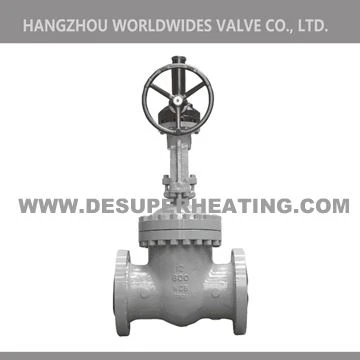

In industrial settings, precise control of water pressure is often crucial. For example, in a manufacturing plant where water is used for cooling or processing, a sudden change in water pressure due to improper valve operation can affect the quality of the products or even damage the equipment. That's why it's important to choose the right type of gate valve and operate it correctly. Our High Pressure Forged Steam Gate Valve is designed to handle high - pressure applications and provide reliable performance.
As a water pipe gate valve supplier, I know how important it is to choose the right valve for your specific needs. If you're in the market for a gate valve, you need to consider factors like the operating pressure of your system, the flow rate, and the type of fluid. A valve that is too small for your system might cause excessive pressure drops, while a valve that is too large can be expensive and might not provide accurate flow control.
If you have any questions about water pipe gate valves or need help choosing the right one for your application, don't hesitate to reach out. We're here to assist you in making the best decision for your water - related projects. Whether you're a homeowner looking to fix a plumbing issue or an industrial engineer in charge of a large - scale water system, we've got the expertise and the products to meet your requirements.
In conclusion, a water pipe gate valve can definitely affect the water pressure in the pipe, but the extent of the effect depends on whether the valve is fully open, partially open, or closed. By understanding these principles, you can make informed decisions about valve operation and selection.
If you're interested in purchasing high - quality water pipe gate valves, feel free to get in touch for a detailed discussion about your needs and how our products can fit those requirements. Let's work together to ensure your water systems operate at their best.
References
- "Fluid Mechanics" by Frank M. White
- "Valve Handbook" by Clark Wright


