

As a globe valve supplier, I've had my fair share of chats with customers about how to control these nifty devices. Automatic globe valves are super important in lots of industries, from oil and gas to water treatment. They help manage the flow of liquids and gases, making sure everything runs smoothly. So, let's dig into the different control methods for automatic globe valves.
Manual Control
Let's start with the basics - manual control. It's the simplest way to operate a globe valve. You just use a handwheel or a lever to open or close the valve. It's like turning on a faucet in your kitchen. You have direct control over how much flow you want.
Manual control is great for small systems or when you don't need to make frequent adjustments. It's also pretty reliable because there are no fancy electronics involved. But it does have its downsides. If you're dealing with a large valve or a high - pressure system, it can be really hard to turn the handwheel. And if you need to make quick changes, it might not be the best option.
Electric Actuators
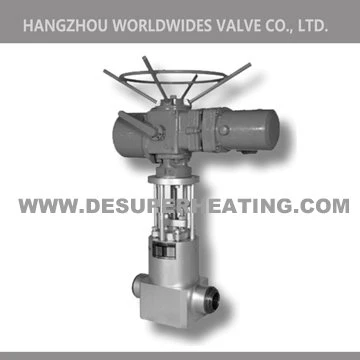
Electric actuators are one of the most popular ways to control automatic globe valves. They use an electric motor to open and close the valve. You can control them remotely using a switch or a control panel.
One of the big advantages of electric actuators is their precision. You can set them to open or close the valve to a specific position, which is really useful in applications where you need to control the flow rate accurately. They're also relatively easy to install and maintain.
However, electric actuators do have some limitations. They rely on a power source, so if there's a power outage, the valve might not work. And they can be a bit slow compared to other types of actuators, especially in high - speed applications.
If you're interested in a high - performance electric - controlled globe valve, check out our High Pressure Steam Motorized Globe Valve. It's designed to handle tough conditions and provides reliable control.
Pneumatic Actuators
Pneumatic actuators use compressed air to operate the valve. They're fast and powerful, making them a great choice for applications where you need quick opening and closing.
These actuators are also very reliable. They don't rely on electricity, so they can work even during power outages. And they're resistant to harsh environments, like those found in chemical plants or offshore platforms.
But pneumatic actuators do require a compressed air supply, which means you need to have an air compressor and a piping system. This can add to the cost and complexity of the installation. Also, they can be a bit noisy when they operate.
Hydraulic Actuators
Hydraulic actuators use hydraulic fluid to generate the force needed to open and close the valve. They're extremely powerful and can handle very high pressures.
They're often used in heavy - duty applications, like in the oil and gas industry, where large valves need to be operated. Hydraulic actuators can provide a lot of force in a small package, which is a big plus.
However, hydraulic systems are more complex than electric or pneumatic systems. They require a hydraulic pump, a reservoir, and a set of valves to control the fluid flow. Maintenance can also be more challenging because of the potential for fluid leaks.
Solenoid Valves
Solenoid valves are a type of electrically - controlled valve that can be used to control the flow of fluids in a globe valve system. They work by using an electromagnetic coil to open or close a small valve, which then controls the flow of fluid to the main globe valve.
Solenoid valves are very fast - acting. They can open and close in a fraction of a second, making them ideal for applications where rapid response is needed. They're also relatively inexpensive and easy to install.
But solenoid valves have a limited flow capacity. They're usually used to control small - to medium - sized globe valves. And they can overheat if they're left energized for too long.
Smart Control Systems
In today's digital age, smart control systems are becoming more and more popular for automatic globe valves. These systems use sensors and advanced algorithms to monitor and control the valve's operation.
Smart control systems can adjust the valve position based on real - time data, such as flow rate, pressure, or temperature. This means they can optimize the valve's performance and reduce energy consumption.
For example, if the system detects a drop in pressure, it can automatically open the valve a bit more to maintain the desired flow rate. And they can also provide diagnostic information, which helps with maintenance and troubleshooting.
Choosing the Right Control Method
So, how do you choose the right control method for your automatic globe valve? Well, it depends on several factors.
First, consider the application. If you're dealing with a high - pressure system or a large valve, you might need a powerful actuator like a hydraulic or pneumatic one. If you need precise control and remote operation, an electric actuator or a smart control system could be a good choice.
Second, think about the environment. If you're in a harsh environment with a lot of dust, moisture, or chemicals, you'll want an actuator that can withstand these conditions. Pneumatic actuators are often a good option in these situations.
Cost is also an important factor. Electric actuators are generally more affordable than hydraulic actuators, but you need to consider the long - term costs, including maintenance and energy consumption.
Finally, consider the level of automation you need. If you want to integrate the valve into a larger control system, a smart control system or an electric actuator with communication capabilities might be the way to go.
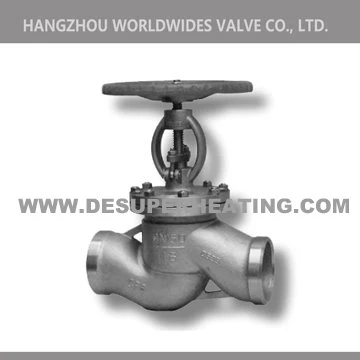
If you're looking for a reliable and cost - effective globe valve, take a look at our Carbon Steel Globe Valve. It's built to last and can be paired with different control methods to suit your needs.
Conclusion
There are several control methods available for automatic globe valves, each with its own advantages and disadvantages. Whether you choose manual control, an electric actuator, a pneumatic actuator, or a smart control system, the key is to find the one that best suits your application, environment, and budget.
If you're still not sure which control method is right for you, or if you have any questions about our globe valves, don't hesitate to reach out. We're here to help you make the best decision for your project. Contact us today to start the procurement process and get your hands on the perfect globe valve for your needs.
References
- "Valve Handbook" by J. S. Holzbock
- "Industrial Valves: Selection and Sizing" by J. M. Munson



