

In the dynamic world of paint manufacturing, maintaining precise temperature control is crucial for ensuring product quality, efficiency, and safety. One of the key technologies that play a vital role in this process is the desuperheater system. As a leading desuperheater system supplier, we are committed to providing high - performance solutions that meet the unique needs of paint manufacturing plants. In this blog, we will explore how a desuperheater system works in a paint manufacturing plant.
The Importance of Temperature Control in Paint Manufacturing
Paint manufacturing involves a complex series of chemical reactions and physical processes. Temperature has a significant impact on these processes. If the temperature is too high, it can lead to accelerated evaporation of solvents, which may cause the paint to dry too quickly during the manufacturing process, resulting in uneven texture and poor adhesion. High temperatures can also cause chemical reactions to occur too rapidly, leading to the degradation of pigments and other additives, thereby affecting the color and long - term stability of the paint.
On the other hand, if the temperature is too low, the viscosity of the paint may increase, making it difficult to mix the components evenly. This can lead to inconsistent product quality, such as streaks or lumps in the final paint product. Therefore, maintaining a stable and appropriate temperature throughout the manufacturing process is essential for producing high - quality paint.
What is a Desuperheater System?
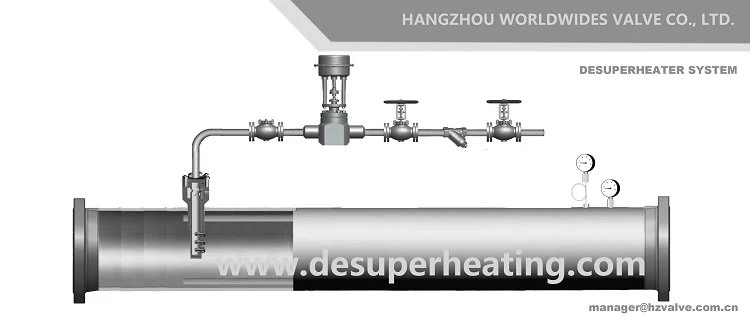
A desuperheater system is a device used to reduce the temperature of superheated steam by injecting a controlled amount of water into the steam flow. When the water is injected into the superheated steam, it evaporates, absorbing heat from the steam and reducing its temperature. There are different types of desuperheaters, such as direct contact desuperheaters and surface desuperheaters.
In a direct contact desuperheater, the cooling water is directly injected into the superheated steam. This type of desuperheater is simple in design and has a high heat - transfer efficiency. The steam and water come into direct contact, and the water rapidly evaporates, cooling the steam effectively.
Surface desuperheaters, on the other hand, use a heat - transfer surface to separate the steam and the cooling water. The superheated steam flows on one side of the surface, while the cooling water flows on the other side. Heat is transferred through the surface from the steam to the water, reducing the steam temperature.
Working Mechanism of a Desuperheater System in a Paint Manufacturing Plant
Installation and Integration
In a paint manufacturing plant, the desuperheater system is usually installed in the steam pipeline. The steam generated from the boiler is often superheated, and before it is used in various processes such as heating the paint mixing tanks or drying the paint products, it needs to be cooled to an appropriate temperature. The desuperheater system is integrated into the pipeline so that the superheated steam can pass through it.
Temperature Sensing and Control
The first step in the operation of the desuperheater system is to sense the temperature of the superheated steam. Temperature sensors are installed at the inlet and outlet of the desuperheater. The sensor at the inlet measures the temperature of the incoming superheated steam, while the sensor at the outlet monitors the temperature of the cooled steam.
Based on the temperature difference between the inlet and the desired outlet temperature, a control system calculates the amount of cooling water required. The control system can be a simple proportional - integral - derivative (PID) controller or a more advanced programmable logic controller (PLC). These controllers adjust the flow rate of the cooling water by controlling the opening of a water injection valve.
Water Injection
Once the control system determines the required amount of cooling water, it sends a signal to the water injection valve. The valve then opens to the appropriate degree, allowing the precise amount of water to be injected into the superheated steam. The water is usually atomized before injection to ensure rapid evaporation. Atomization can be achieved through various methods, such as using a spray nozzle. The atomized water droplets have a large surface area, which facilitates quick heat transfer and evaporation.
Heat Transfer and Temperature Reduction
As the atomized water droplets come into contact with the superheated steam, they absorb heat from the steam and evaporate. This phase - change process requires a large amount of latent heat, which is taken from the superheated steam. As a result, the temperature of the steam decreases rapidly. The steam and the evaporated water then continue to flow through the pipeline, and the cooled steam is ready to be used in the paint manufacturing processes.
Applications of Desuperheater Systems in Paint Manufacturing
Heating Paint Mixing Tanks
In paint manufacturing, raw materials such as pigments, resins, and solvents need to be mixed thoroughly. Heating the mixing tanks can improve the fluidity of the materials and enhance the mixing efficiency. Superheated steam is often used as a heating medium. However, if the steam temperature is too high, it can damage the paint components. A desuperheater system can reduce the steam temperature to an appropriate level, ensuring safe and effective heating of the mixing tanks.
Drying Paint Products
After the paint is mixed, it needs to be dried. Steam - heated drying ovens are commonly used in the industry. By using a desuperheater system to control the steam temperature, the drying process can be better regulated. This helps to prevent over - drying or uneven drying of the paint products, resulting in consistent quality.
Advantages of Our Desuperheater Systems
As a desuperheater system supplier, we offer several advantages to paint manufacturing plants:
- Precise Temperature Control: Our desuperheater systems are equipped with advanced control technology, which can accurately maintain the steam temperature within a narrow range. This ensures that the paint manufacturing processes are carried out under optimal temperature conditions, leading to high - quality products.
- Reliability: We use high - quality materials and components in the manufacturing of our desuperheater systems. They are designed to withstand the harsh operating conditions in a paint manufacturing plant, such as high pressure and temperature fluctuations. This results in reliable and long - lasting performance.
- Energy Efficiency: Our desuperheater systems are designed to minimize energy consumption. By accurately controlling the amount of cooling water injected, we ensure that the heat transfer process is efficient, reducing unnecessary energy waste.
Related Links
For more information about our desuperheater systems, you can visit the following links:

Conclusion
In conclusion, a desuperheater system plays a crucial role in a paint manufacturing plant by providing precise temperature control of superheated steam. It helps to ensure the quality of paint products, improve manufacturing efficiency, and enhance safety. As a reliable desuperheater system supplier, we are dedicated to providing top - notch solutions that meet the specific requirements of the paint manufacturing industry.
If you are interested in our desuperheater systems and would like to discuss your procurement needs, please feel free to reach out to us. We are looking forward to working with you to optimize your paint manufacturing processes.
References
- Perry, R. H., & Green, D. W. (1997). Perry's Chemical Engineers' Handbook. McGraw - Hill.
- Sinnott, R. K. (2005). Coulson & Richardson's Chemical Engineering: Chemical Engineering Design. Butterworth - Heinemann.



