

Hey there! As an industrial safety valve supplier, I've had my fair share of dealing with different types of valves. One question that often pops up is, "What's the difference between a high - lift and a low - lift industrial safety valve?" Well, let's dive right in and break it down.
Basics of Industrial Safety Valves
Before we get into the differences, let's quickly go over what industrial safety valves are all about. These valves are crucial components in any industrial system. Their main job is to protect equipment and people from over - pressure situations. When the pressure in a system exceeds a set limit, the safety valve opens up to release the excess pressure, preventing potential disasters like explosions or equipment failures.
Low - Lift Industrial Safety Valves
Let's start with low - lift safety valves. These valves are designed to open just a little bit when the pressure reaches the set limit. The lift, which is the distance the valve disc moves off its seat, is relatively small. Usually, the lift is less than 1/20 of the valve orifice diameter.
One of the big advantages of low - lift valves is their simplicity. They're relatively easy to design and manufacture, which means they're often more affordable. This makes them a popular choice for systems where cost is a major factor. For example, in some small - scale industrial processes where the pressure doesn't fluctuate too wildly, a low - lift valve can do the job just fine.
Another benefit is their stability. Because the lift is small, the valve tends to be more stable during operation. It doesn't have the wild swings in flow that some high - lift valves can experience. This stability can be really important in systems where a sudden large release of pressure could cause problems.

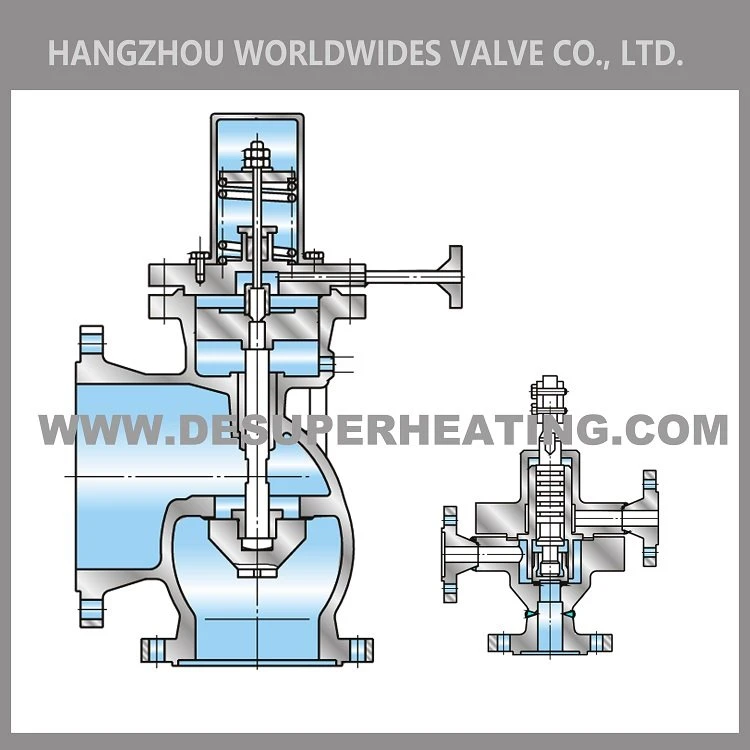
However, low - lift valves also have their limitations. Since they only open a little bit, they can't release a large amount of fluid quickly. This means they're not suitable for systems that need to relieve a lot of pressure in a short amount of time. For instance, in a steam boiler system where a large amount of steam might need to be released suddenly to prevent an explosion, a low - lift valve might not be up to the task.
High - Lift Industrial Safety Valves
Now, let's talk about high - lift safety valves. These valves are designed to open much wider than low - lift valves. The lift is typically greater than 1/4 of the valve orifice diameter.
The main advantage of high - lift valves is their high flow capacity. They can release a large amount of fluid or gas very quickly. This makes them ideal for systems that need to handle large pressure surges. For example, in a chemical processing plant where there could be sudden reactions that generate a lot of pressure, a high - lift valve can quickly relieve the excess pressure and keep the system safe.
High - lift valves also offer better response times. They can open and close more rapidly than low - lift valves, which is crucial in situations where every second counts. In a power generation plant, for instance, a high - lift valve can respond quickly to changes in steam pressure, ensuring the smooth operation of the turbines.
But high - lift valves aren't without their drawbacks. They're more complex to design and manufacture, which means they're usually more expensive. They also require more maintenance than low - lift valves. The larger moving parts and more complex mechanisms can wear out faster, and they need to be inspected and serviced regularly to ensure they're working properly.
Applications
The choice between a high - lift and a low - lift valve really depends on the specific application. For low - pressure systems with relatively stable pressure conditions, a low - lift valve is often the way to go. They're cost - effective and reliable for these types of applications. For example, in a small water treatment plant where the pressure doesn't vary much, a low - lift valve can provide adequate protection.
On the other hand, high - lift valves are better suited for high - pressure systems or systems that are prone to sudden pressure surges. In an oil refinery, where there are high - pressure pipelines and complex processes, high - lift valves are essential to prevent catastrophic failures.
Related Products
If you're in the market for industrial safety valves, we also offer a range of related products. Check out our Heater Safety Valve, which is specifically designed to protect heaters from over - pressure. We also have Full Nozzle Safety Valve, which provides excellent flow capacity and reliability. And for those who use solar water heaters, our Safety Valve For Solar Water Heater is a great choice to ensure the safety of your system.
Wrapping Up
So, to sum it up, the main difference between high - lift and low - lift industrial safety valves lies in their lift, flow capacity, cost, and complexity. Low - lift valves are simple, affordable, and stable, but have limited flow capacity. High - lift valves, on the other hand, can handle large pressure surges quickly but are more expensive and require more maintenance.
If you're still not sure which type of valve is right for your application, don't hesitate to reach out. We're here to help you make the best choice for your industrial safety needs. Whether you're a small business or a large corporation, we have the expertise and the products to keep your systems safe.
References
- "Industrial Valves Handbook"
- "Safety Valve Engineering Principles"



