

Industrial safety valves are crucial components in various industrial processes, designed to protect equipment and personnel from overpressure situations. Among the different types of safety valves, direct-acting and pilot-operated valves are two commonly used designs, each with its own unique characteristics and applications. As an experienced industrial safety valve supplier, I will delve into the differences between these two types to help you make an informed decision for your specific needs.

Working Principles
Direct-Acting Safety Valves
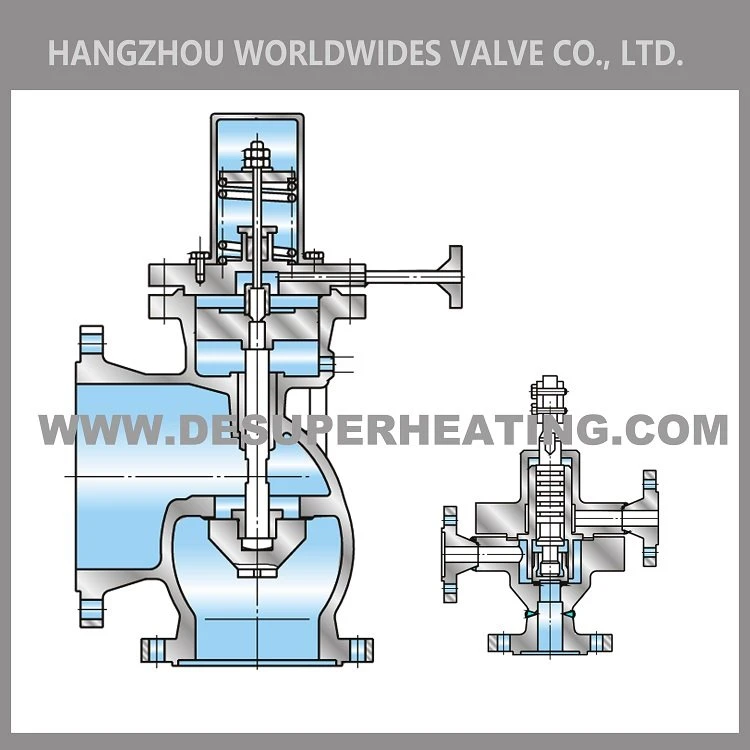
Direct-acting safety valves operate based on a simple mechanical principle. They consist of a valve disc, a spring, and a valve seat. The spring exerts a pre-set force on the valve disc, keeping it closed against the valve seat under normal operating conditions. When the system pressure exceeds the set pressure of the spring, the force exerted by the pressure on the valve disc overcomes the spring force, causing the valve to open and release the excess pressure.
This type of valve is straightforward in design and operation, making it reliable and easy to maintain. It responds quickly to changes in pressure, providing immediate relief when needed. However, the size and capacity of direct-acting valves are limited by the strength of the spring. As the required set pressure increases, the spring needs to be stronger, which can make the valve larger and more expensive.
Pilot-Operated Safety Valves
Pilot-operated safety valves, on the other hand, are more complex in design. They consist of a main valve and a pilot valve. The pilot valve senses the system pressure and controls the opening and closing of the main valve. Under normal operating conditions, the pilot valve keeps the main valve closed by applying a pressure differential across the main valve disc.
When the system pressure reaches the set pressure of the pilot valve, the pilot valve opens, releasing the pressure on the top side of the main valve disc. This causes the main valve to open rapidly, allowing the excess pressure to be relieved. The pilot valve can be adjusted to control the opening and closing characteristics of the main valve, providing more precise control over the pressure relief process.
Pilot-operated valves can handle higher pressures and larger flow rates compared to direct-acting valves. They are also more suitable for applications where a tight shut-off is required, as the pilot valve can maintain a seal on the main valve even at low pressures. However, their complex design makes them more expensive and requires more maintenance compared to direct-acting valves.
Performance Characteristics
Set Pressure Accuracy
Direct-acting safety valves typically have a set pressure accuracy of ±3% to ±5%. This means that the actual opening pressure of the valve may deviate from the set pressure within this range. The accuracy is mainly affected by the manufacturing tolerance of the spring and the valve components.
Pilot-operated safety valves can achieve a higher set pressure accuracy of ±1% to ±2%. The pilot valve can be precisely calibrated to control the opening of the main valve, resulting in a more accurate pressure relief. This makes pilot-operated valves more suitable for applications where precise pressure control is required.
Blowdown
Blowdown is the difference between the set pressure and the reseating pressure of a safety valve. A lower blowdown means that the valve will reseat closer to the set pressure, reducing the amount of fluid that is released during a pressure relief event.
Direct-acting safety valves usually have a blowdown of 4% to 10%. The blowdown is mainly determined by the design of the valve and the characteristics of the spring. Pilot-operated safety valves can have a lower blowdown of 1% to 4%, providing a more efficient pressure relief process.
Flow Capacity
The flow capacity of a safety valve is determined by its size and design. Direct-acting safety valves are generally limited in size due to the strength of the spring. As a result, their flow capacity is relatively small compared to pilot-operated valves.
Pilot-operated safety valves can be designed to handle large flow rates, making them suitable for applications where a high volume of fluid needs to be relieved quickly. They can be used in industries such as oil and gas, power generation, and chemical processing.
Applications
Direct-Acting Safety Valves
Direct-acting safety valves are commonly used in applications where the pressure is relatively low and the flow rate is small. They are suitable for use in small-scale industrial processes, such as heating systems, water treatment plants, and pneumatic systems.
For example, in a heating system, a direct-acting safety valve can be used to protect the boiler from overpressure. The valve will open when the pressure in the boiler exceeds the set pressure, releasing the excess steam and preventing damage to the boiler.
Pilot-Operated Safety Valves
Pilot-operated safety valves are widely used in applications where high pressures and large flow rates are involved. They are commonly found in industries such as oil and gas, petrochemical, and power generation.
In the oil and gas industry, pilot-operated safety valves are used to protect pipelines, storage tanks, and processing equipment from overpressure. They can handle the high pressures and large flow rates associated with these applications, ensuring the safety of the equipment and personnel.
Cost Considerations
Initial Cost
Direct-acting safety valves are generally less expensive than pilot-operated valves. Their simple design and fewer components make them more affordable to manufacture. However, as the required set pressure and flow capacity increase, the cost of direct-acting valves can also increase significantly.
Pilot-operated safety valves are more expensive due to their complex design and additional components. The cost of the pilot valve and the control system can add to the overall cost of the valve. However, for applications where high pressures and large flow rates are required, the cost of a pilot-operated valve may be justified by its performance and reliability.
Maintenance Cost
Direct-acting safety valves are relatively easy to maintain. They have fewer moving parts, which reduces the likelihood of failure. Regular inspection and testing of the spring and valve components are usually sufficient to ensure the proper operation of the valve.
Pilot-operated safety valves require more maintenance due to their complex design. The pilot valve and the control system need to be regularly calibrated and inspected to ensure accurate operation. In addition, the main valve may require more frequent maintenance to prevent leakage and ensure a tight shut-off.
Conclusion
In summary, direct-acting and pilot-operated safety valves have their own advantages and disadvantages. Direct-acting valves are simple, reliable, and cost-effective for applications with low pressures and small flow rates. Pilot-operated valves, on the other hand, offer higher performance, greater accuracy, and larger flow capacities, but at a higher cost and with more maintenance requirements.
As an industrial safety valve supplier, we offer a wide range of Stainless Steel Pressure Relief Valve, Heater Safety Valve, and Full Bore Type Safety Valve to meet the diverse needs of our customers. Whether you need a direct-acting or a pilot-operated safety valve, our team of experts can help you select the right valve for your application.
If you are interested in learning more about our industrial safety valves or would like to discuss your specific requirements, please contact us. We are committed to providing high-quality products and excellent customer service to ensure the safety and efficiency of your industrial processes.
References
- API 520, Sizing, Selection, and Installation of Pressure-Relieving Devices in Refineries, American Petroleum Institute.
- ASME Boiler and Pressure Vessel Code, Section VIII, Division 1, Rules for Construction of Pressure Vessels, American Society of Mechanical Engineers.
- ISO 4126, Safety Devices for Protection against Excessive Pressure, International Organization for Standardization.



