

Hey there! As a supplier of 2 Port Control Valves, I often get asked about the control signals for these valves. So, I thought I'd take a few minutes to break it down for you and share some insights.
First off, let's talk about what a 2 Port Control Valve is. Simply put, it's a valve with two ports - an inlet and an outlet. These valves are used in a wide range of applications to control the flow of fluids, like water, steam, or gas. They can adjust the flow rate, pressure, or temperature of the fluid passing through them, making them super important in many industrial and commercial settings.
Now, onto the main question - what are the control signals for a 2 Port Control Valve? There are several types of control signals that can be used, and each has its own advantages and uses.
Electrical Signals
One of the most common types of control signals is electrical. These signals can be either analog or digital.
Analog Signals
Analog signals are continuous signals that can vary in value. They're often used to provide a proportional control of the valve. For example, a 4 - 20 mA signal is a very common analog signal in industrial applications. When the current is 4 mA, the valve might be fully closed, and as the current increases to 20 mA, the valve gradually opens to its fully open position. This type of signal allows for precise control of the valve's position, which is great for applications where you need to fine - tune the flow of the fluid.
Many of our Large Capacity Steam Pressure Reducing Valve models can be controlled using analog electrical signals. This gives operators the ability to adjust the steam flow accurately, which is crucial for maintaining the right pressure and temperature in steam - based systems.
Digital Signals
Digital signals, on the other hand, are discrete signals that have only two states - on or off. They're typically used for simple on/off control of the valve. For example, a 24 VDC signal can be used to open or close the valve. When the voltage is applied, the valve opens, and when the voltage is removed, the valve closes. Digital signals are easy to work with and are commonly used in applications where you just need basic control, like in some small - scale water supply systems.
Pneumatic Signals
Pneumatic signals use compressed air to control the valve. These signals are often used in applications where electrical signals might not be suitable, such as in explosive environments. A common pneumatic signal range is 3 - 15 psi. Similar to analog electrical signals, a lower pressure (3 psi) might correspond to a closed valve, and as the pressure increases to 15 psi, the valve opens.
Our Pneumatic Pressure Reducing Valve is designed to work well with pneumatic control signals. It allows for reliable control of the pressure of compressed air or other gases in various industrial processes.
Hydraulic Signals
Hydraulic signals use a liquid, usually oil, to control the valve. Hydraulic control is known for its high power and precision. In a hydraulic system, the pressure of the liquid is used to move the valve actuator. This type of control is often used in heavy - duty applications where large forces are required to operate the valve, such as in some large - scale industrial machinery.
Choosing the Right Control Signal
When choosing a control signal for a 2 Port Control Valve, there are several factors to consider.
Application Requirements
The first thing to think about is the specific requirements of your application. If you need precise control of the flow rate, an analog electrical or pneumatic signal might be the best choice. But if you just need simple on/off control, a digital electrical signal could be sufficient.
Environment
The environment in which the valve will be used is also important. In explosive or hazardous environments, pneumatic signals are often preferred over electrical signals to reduce the risk of sparks.
Compatibility
You also need to make sure that the control signal is compatible with the valve actuator and the control system you're using. Some valves are designed to work with specific types of signals, so it's crucial to check the valve's specifications.
Benefits of Our 2 Port Control Valves
At our company, we offer a wide range of 2 Port Control Valves that are designed to work with different types of control signals. Our valves are known for their high quality, reliability, and performance.
Precision Engineering
Our valves are precision - engineered to provide accurate and consistent control. Whether you're using an analog or digital signal, you can trust that our valves will respond as expected.
Durability
We use high - quality materials in the construction of our valves, which makes them durable and long - lasting. This means less maintenance and replacement costs in the long run.
Versatility
Our valves can be used in a variety of applications, from small - scale commercial systems to large - scale industrial plants. And they're compatible with different control signals, giving you the flexibility to choose the best control method for your needs.
For instance, our High Pressure Water Pressure Control Valve is suitable for high - pressure water systems and can be controlled using different signals to maintain the right water pressure.
Conclusion
In conclusion, the control signal for a 2 Port Control Valve can be electrical (analog or digital), pneumatic, or hydraulic. Each type of signal has its own advantages and is suitable for different applications. When choosing a control signal, it's important to consider the application requirements, the environment, and compatibility.
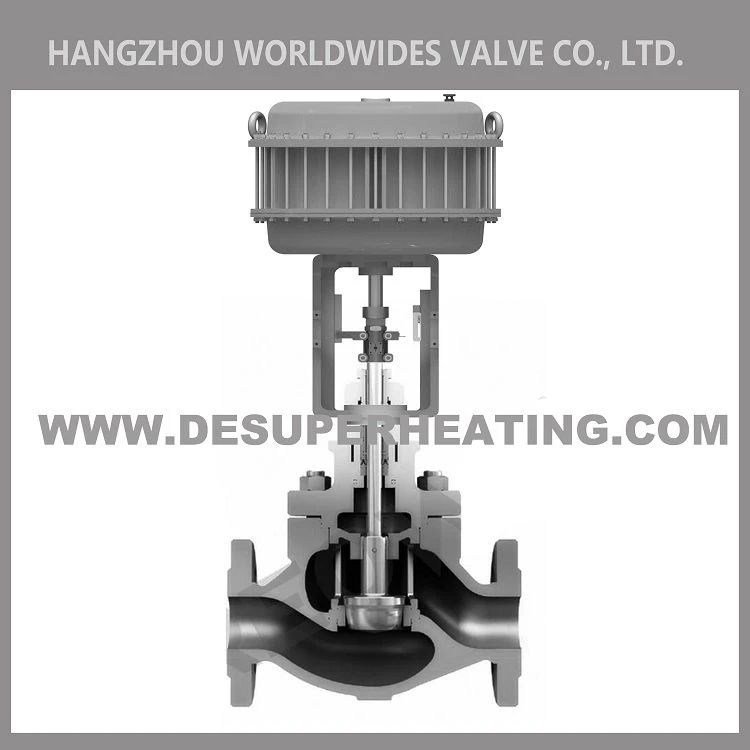

If you're in the market for a 2 Port Control Valve and need help choosing the right control signal or valve for your application, don't hesitate to reach out to us. We're here to assist you in finding the best solution for your needs. Whether you're working on a small - scale project or a large - scale industrial installation, we have the expertise and products to meet your requirements. Contact us today to start the procurement process and let's get your system up and running smoothly.
References
- "Industrial Valves Handbook" - A comprehensive guide on different types of industrial valves and their control systems.
- "Control Systems Engineering" - A textbook that covers the principles of control signals and their applications in various engineering systems.



