

What is the static characteristics of a control valve?
As a seasoned supplier in the control valve industry, I've witnessed firsthand the pivotal role these components play in diverse industrial processes. Control valves are the unsung heroes of fluid control systems, regulating the flow, pressure, and temperature of various media with precision and reliability. In this blog, I'll delve into the static characteristics of control valves, shedding light on their importance and how they impact the performance of your industrial operations.
Flow Characteristics
One of the most critical static characteristics of a control valve is its flow characteristic, which describes the relationship between the valve's opening and the flow rate of the fluid passing through it. There are several types of flow characteristics, each suited to different applications and system requirements.
- Linear Flow Characteristic: A valve with a linear flow characteristic exhibits a direct proportionality between the valve opening and the flow rate. In other words, a 50% valve opening corresponds to 50% of the maximum flow rate. Linear flow characteristics are ideal for applications where a constant change in flow rate is required for a given change in valve position, such as in level control systems.
- Equal Percentage Flow Characteristic: An equal percentage flow characteristic means that a constant percentage change in valve opening results in an equal percentage change in flow rate. For example, a 10% change in valve opening from 20% to 30% will produce the same percentage change in flow rate as a 10% change from 50% to 60%. This characteristic is well-suited for applications where the system resistance varies significantly, such as in temperature control systems.
- Quick Opening Flow Characteristic: A quick opening flow characteristic provides a large increase in flow rate for a small change in valve opening at the beginning of the stroke. This type of characteristic is commonly used in on-off applications where rapid flow control is required, such as in emergency shutdown systems.
Pressure Drop Characteristics
Another important static characteristic of a control valve is its pressure drop characteristic, which refers to the relationship between the pressure drop across the valve and the flow rate. The pressure drop across a control valve is a result of the resistance offered by the valve to the flow of fluid.
- Valve Coefficient (Cv): The valve coefficient, also known as the flow coefficient, is a measure of the valve's capacity to pass fluid. It is defined as the number of U.S. gallons per minute of water at 60°F that will flow through the valve with a pressure drop of 1 psi. A higher Cv value indicates a larger valve capacity.
- Pressure Recovery Factor (FL): The pressure recovery factor is a measure of the valve's ability to recover pressure downstream of the valve. It is defined as the ratio of the actual pressure recovery to the theoretical pressure recovery. A higher FL value indicates better pressure recovery and less cavitation potential.
Rangeability
Rangeability is the ratio of the maximum to the minimum flow rate that a control valve can handle while maintaining acceptable control performance. It is an important characteristic that determines the valve's ability to operate effectively over a wide range of flow conditions.
- Turndown Ratio: The turndown ratio is another term used to describe the rangeability of a control valve. It is the ratio of the maximum to the minimum controllable flow rate. A higher turndown ratio means that the valve can operate effectively over a wider range of flow rates.
Leakage Class
The leakage class of a control valve refers to the maximum allowable leakage rate of the valve when it is fully closed. It is an important consideration, especially in applications where tight shutoff is required to prevent process fluid from leaking.
- ANSI/FCI 70-2 Leakage Classes: The American National Standards Institute (ANSI) and the Fluid Controls Institute (FCI) have established a standard for control valve leakage classes. The classes range from Class I (the least stringent) to Class VI (the most stringent), with Class VI providing the tightest shutoff.
How These Characteristics Impact Your Operations
Understanding the static characteristics of control valves is crucial for selecting the right valve for your specific application. The flow characteristic, for example, can significantly affect the control performance of your system. Choosing the wrong flow characteristic can lead to poor control stability, excessive cycling, and inefficient operation.
Similarly, the pressure drop characteristic and rangeability of the valve can impact the overall energy consumption and cost of your system. A valve with a high pressure drop will require more energy to operate, while a valve with a low rangeability may not be able to handle the full range of flow conditions in your process.
Our Product Offerings
At our company, we offer a wide range of control valves to meet the diverse needs of our customers. Our product portfolio includes Sprayer Control Valve, Pressure Control Valve, and Double Acting Control Valve.
Our sprayer control valves are designed to provide precise control of the spray pattern and flow rate in various spraying applications. They are available in different sizes and materials to suit different operating conditions.

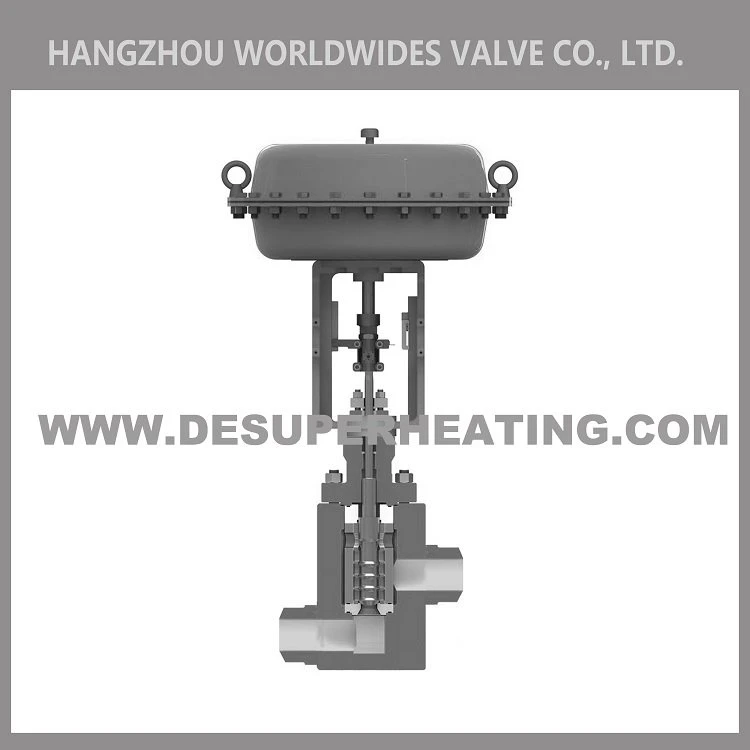
Our pressure control valves are used to maintain a constant pressure in a system by regulating the flow of fluid. They are highly reliable and offer excellent pressure control performance.
Our double acting control valves are suitable for applications where bidirectional flow control is required. They are designed to provide fast and accurate response to changes in process conditions.
Contact Us for Procurement
If you're in the market for high-quality control valves, we'd love to hear from you. Our team of experts can help you select the right valve for your application based on your specific requirements. Whether you need a single valve or a complete valve system, we have the expertise and resources to meet your needs.
Don't hesitate to reach out to us to start a discussion about your procurement needs. We're committed to providing you with the best products and services to ensure the success of your industrial operations.
References
- ANSI/FCI 70-2-2006, Control Valve Seat Leakage.
- Perry, R. H., & Green, D. W. (Eds.). (2008). Perry's Chemical Engineers' Handbook (8th ed.). McGraw-Hill.
- Sinnott, R. K. (2005). Coulson & Richardson's Chemical Engineering: Volume 6 - Chemical Engineering Design (4th ed.). Butterworth-Heinemann.



