

A desuperheater system is a crucial component in many industrial processes, especially those involving steam. It helps to control the temperature of superheated steam by injecting water into it, ensuring that the steam is at the desired temperature for various applications. As a supplier of Desuperheating System, I understand the importance of properly adjusting the parameters of these systems to achieve optimal performance. In this blog post, I will share some insights on how to adjust the parameters of a desuperheater system effectively.
Understanding the Basics of a Desuperheater System
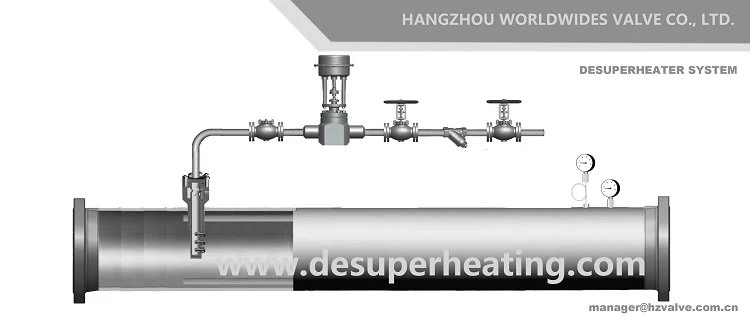
Before diving into the parameter adjustment process, it's essential to have a basic understanding of how a Desuperheater system works. A typical desuperheater system consists of a desuperheater unit, a water injection system, and control valves. The desuperheater unit is where the mixing of superheated steam and water occurs. The water injection system is responsible for injecting the right amount of water into the steam, and the control valves regulate the flow of steam and water.
The key parameters that need to be adjusted in a desuperheater system include the steam flow rate, water flow rate, steam temperature, and pressure. These parameters are interdependent, and a change in one can affect the others. Therefore, it's crucial to have a clear understanding of how each parameter affects the overall performance of the system.
Step 1: Determine the Design Conditions
The first step in adjusting the parameters of a desuperheater system is to determine the design conditions. These conditions include the inlet steam temperature, pressure, and flow rate, as well as the desired outlet steam temperature. The design conditions are usually specified by the process requirements and are based on the specific application of the steam.
To determine the design conditions, you need to consult the process flow diagram (PFD) and the piping and instrumentation diagram (P&ID) of the system. These diagrams provide detailed information about the steam and water flow paths, as well as the operating conditions of the system. You also need to consider the maximum and minimum steam flow rates and temperatures that the system is expected to handle.
Step 2: Calculate the Required Water Flow Rate
Once you have determined the design conditions, the next step is to calculate the required water flow rate. The water flow rate is calculated based on the principle of energy balance. The energy balance equation states that the energy of the superheated steam before mixing is equal to the energy of the steam and water mixture after mixing.
The formula for calculating the water flow rate is as follows:
[m_w=\frac{m_s\times C_{p_s}\times(T_{s_in}-T_{s_out})}{h_{fg}-C_{p_w}\times(T_{s_out}-T_{w_in})}]
Where:
- (m_w) is the water flow rate (kg/s)
- (m_s) is the steam flow rate (kg/s)
- (C_{p_s}) is the specific heat capacity of steam (kJ/kg.K)
- (T_{s_in}) is the inlet steam temperature (°C)
- (T_{s_out}) is the desired outlet steam temperature (°C)
- (h_{fg}) is the latent heat of vaporization of water (kJ/kg)
- (C_{p_w}) is the specific heat capacity of water (kJ/kg.K)
- (T_{w_in}) is the inlet water temperature (°C)
You can use a steam table or a thermodynamic software to obtain the values of (C_{p_s}), (h_{fg}), and (C_{p_w}) at the given temperatures and pressures.
Step 3: Adjust the Control Valves
After calculating the required water flow rate, the next step is to adjust the control valves to achieve the desired flow rates of steam and water. The control valves are usually controlled by a temperature controller, which compares the actual outlet steam temperature with the desired temperature and adjusts the valve positions accordingly.
To adjust the control valves, you need to follow the manufacturer's instructions and use a valve positioner or a control system. The valve positioner ensures that the valve opens and closes to the correct position based on the control signal from the temperature controller. You also need to check the valve sizing to ensure that it can handle the required flow rates.
Step 4: Monitor and Fine-Tune the System
Once the control valves are adjusted, you need to monitor the system to ensure that it is operating within the desired parameters. You can use temperature and pressure sensors to measure the steam and water temperatures and pressures at various points in the system. You also need to monitor the water flow rate using a flow meter.
If the outlet steam temperature is not within the desired range, you may need to fine-tune the control valves. This may involve adjusting the setpoint of the temperature controller or the calibration of the control valves. You also need to check for any leaks or blockages in the system, as these can affect the performance of the desuperheater.

Step 5: Consider the Effects of Pressure Changes
In addition to temperature, pressure is another important parameter that can affect the performance of a desuperheater system. A change in pressure can affect the steam and water flow rates, as well as the heat transfer characteristics of the system. Therefore, it's important to consider the effects of pressure changes when adjusting the parameters of the system.
If the pressure of the steam or water changes, you may need to recalculate the required water flow rate and adjust the control valves accordingly. You also need to ensure that the desuperheater unit and the control valves are designed to handle the maximum and minimum pressures that the system is expected to encounter.
Step 6: Regular Maintenance and Calibration
To ensure the long-term performance of a desuperheater system, it's important to perform regular maintenance and calibration. Regular maintenance includes checking for leaks, cleaning the desuperheater unit, and inspecting the control valves and sensors. Calibration involves checking the accuracy of the temperature and pressure sensors, as well as the control valves.
By performing regular maintenance and calibration, you can prevent problems such as corrosion, fouling, and valve malfunction, which can affect the performance of the system. You can also ensure that the system is operating at its optimal efficiency, which can result in energy savings and reduced operating costs.
Conclusion
Adjusting the parameters of a Pressure Reducing Desuperheating System is a complex process that requires a clear understanding of the system's design and operation. By following the steps outlined in this blog post, you can ensure that your desuperheater system is operating at its optimal performance.
If you are looking for a reliable desuperheater system supplier, we are here to help. Our team of experts has extensive experience in designing, manufacturing, and installing desuperheater systems for various industries. We can provide you with customized solutions that meet your specific requirements and ensure the efficient operation of your system. Contact us today to discuss your needs and explore how we can assist you in your next project.
References
- Perry, R. H., & Green, D. W. (1997). Perry's Chemical Engineers' Handbook (7th ed.). McGraw-Hill.
- Sinnott, R. K. (2005). Coulson & Richardson's Chemical Engineering: Volume 6 - Chemical Engineering Design (4th ed.). Butterworth-Heinemann.



