

A direct contact steam desuperheater is a crucial component in many industrial processes, especially those involving steam systems. As a supplier of steam desuperheaters, I am often asked about the principle behind these devices. In this blog post, I will delve into the working principle of a direct contact steam desuperheater, its applications, and why it is an essential part of many industrial operations.
The Basics of Steam Desuperheating
Before we dive into the principle of a direct contact steam desuperheater, let's first understand what steam desuperheating is. Superheated steam is steam that has been heated to a temperature higher than its saturation temperature at a given pressure. While superheated steam has its uses, such as in power generation and certain industrial processes, there are also situations where it needs to be cooled down to a more suitable temperature. This process of cooling superheated steam is called desuperheating.
Desuperheating is important for several reasons. Firstly, it can help to protect downstream equipment from the high temperatures of superheated steam, which can cause damage or reduce the lifespan of the equipment. Secondly, it can improve the efficiency of certain processes by providing steam at the optimal temperature. For example, in some heating applications, steam at a lower, more controlled temperature may be more effective.
The Principle of a Direct Contact Steam Desuperheater
A direct contact steam desuperheater works on the principle of direct mixing of water with superheated steam. The basic idea is simple: when water is injected into superheated steam, the water absorbs heat from the steam, causing the steam to cool down. The water evaporates in the process, and the resulting mixture is a saturated or slightly superheated steam at a lower temperature.
Let's break down the process into steps:
- Water Injection: The first step is to inject water into the superheated steam. This is typically done using a nozzle or a set of nozzles. The nozzles are designed to atomize the water into fine droplets, which increases the surface area of the water and allows for more efficient heat transfer.
- Heat Transfer: Once the water droplets are injected into the steam, heat transfer occurs between the water and the steam. The superheated steam transfers its heat to the water droplets, causing the water to evaporate. This process is driven by the temperature difference between the steam and the water. The heat transfer rate depends on several factors, including the surface area of the water droplets, the temperature difference, and the flow rate of the steam and water.
- Mixing: As the water droplets evaporate, they mix with the steam to form a homogeneous mixture. The resulting steam is at a lower temperature and may be saturated or slightly superheated, depending on the amount of water injected and the initial conditions of the steam.
Factors Affecting the Performance of a Direct Contact Steam Desuperheater
Several factors can affect the performance of a direct contact steam desuperheater. These include:
- Water Quality: The quality of the water used for desuperheating is important. Water with high levels of impurities, such as minerals or dissolved solids, can cause scaling or fouling in the desuperheater, which can reduce its efficiency and lifespan. It is therefore recommended to use high-quality, clean water for desuperheating.
- Water Flow Rate: The flow rate of the water injected into the steam is a critical parameter. If the water flow rate is too low, the steam may not be cooled down sufficiently. On the other hand, if the water flow rate is too high, there may be an excess of water in the steam, which can cause problems such as water hammer or carryover. The water flow rate needs to be carefully controlled to ensure optimal performance.
- Steam Flow Rate and Temperature: The flow rate and temperature of the superheated steam also affect the performance of the desuperheater. Higher steam flow rates require more water to be injected to achieve the desired temperature reduction. Similarly, higher steam temperatures require more heat to be removed, which may also require a higher water flow rate.
- Nozzle Design: The design of the nozzles used for water injection is crucial. The nozzles need to be able to atomize the water into fine droplets and distribute them evenly throughout the steam. A well-designed nozzle can improve the efficiency of the heat transfer process and ensure uniform cooling of the steam.
Applications of Direct Contact Steam Desuperheaters
Direct contact steam desuperheaters are used in a wide range of industries and applications. Some common applications include:
- Power Generation: In power plants, direct contact steam desuperheaters are used to control the temperature of steam before it enters the turbines. This helps to protect the turbines from high temperatures and improve their efficiency.
- Chemical and Petrochemical Industries: In these industries, steam is often used for heating, distillation, and other processes. Direct contact steam desuperheaters are used to provide steam at the optimal temperature for these processes.
- Food and Beverage Industry: In the food and beverage industry, steam is used for sterilization, heating, and other processes. Direct contact steam desuperheaters are used to ensure that the steam is at the right temperature for these applications, without causing damage to the products.
- HVAC Systems: In heating, ventilation, and air conditioning (HVAC) systems, direct contact steam desuperheaters can be used to provide steam at the appropriate temperature for heating or humidification.
Why Choose Our Direct Contact Steam Desuperheaters
As a supplier of steam desuperheaters, we offer several advantages to our customers. Our direct contact steam desuperheaters are designed with the latest technology and high-quality materials to ensure reliable and efficient performance. Here are some of the reasons why you should choose our products:
- Advanced Design: Our desuperheaters are designed with advanced nozzles and mixing chambers to ensure optimal atomization of water and efficient heat transfer. This results in a more uniform temperature reduction and better control of the steam temperature.
- Customization: We understand that every application is unique, and we offer customized solutions to meet the specific needs of our customers. Whether you need a desuperheater for a small-scale process or a large industrial plant, we can design and manufacture a product that fits your requirements.
- Quality Assurance: We have a strict quality control system in place to ensure that all our products meet the highest standards of quality and performance. Our desuperheaters are tested thoroughly before they are shipped to our customers to ensure that they work as expected.
- Technical Support: We provide comprehensive technical support to our customers. Our team of experts is available to answer any questions you may have about our products, installation, operation, or maintenance.
Conclusion
In conclusion, a direct contact steam desuperheater is a simple yet effective device for cooling superheated steam. By injecting water into the steam and allowing for direct mixing, it can reduce the temperature of the steam and provide a more suitable steam for various industrial processes. As a supplier of steam desuperheaters, we are committed to providing high-quality products and excellent service to our customers.

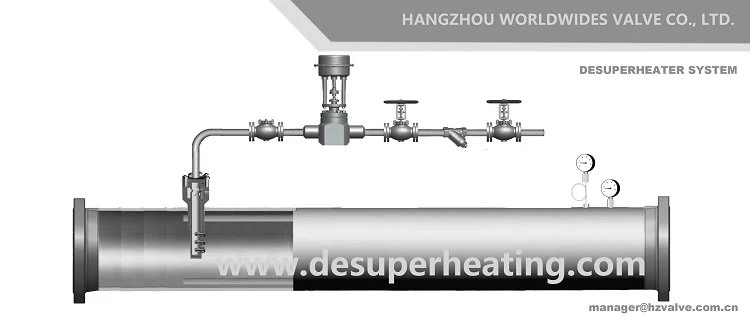
If you are interested in learning more about our direct contact steam desuperheaters or have a specific application in mind, please feel free to contact us. We would be happy to discuss your needs and provide you with a customized solution. You can also visit our website for more information about our Desuperheating System, Desuperheater, and Desuperheating For Superheated Steam.
References
- Perry, R. H., & Green, D. W. (1997). Perry's Chemical Engineers' Handbook. McGraw-Hill.
- Stoecker, W. F. (1998). Refrigeration and Air Conditioning. McGraw-Hill.



