

As a well - established globe valve supplier, I've had the privilege of witnessing the crucial role these valves play in various industrial applications. Understanding the flow characteristics of a globe valve is essential for engineers, operators, and decision - makers in industries such as oil and gas, power generation, and chemical processing. In this blog, I'll delve into the intricacies of globe valve flow characteristics, highlighting their advantages, limitations, and real - world implications.
Basics of Globe Valves
Globe valves are named for their spherical body shape, which contains an internal baffle that separates the inlet and outlet ports. The valve's disc, which is connected to a stem, moves perpendicular to the seat to control the flow of fluid. When the disc is fully open, the fluid can pass through the valve with relatively low resistance. As the disc is gradually closed, the flow area decreases, and the resistance to flow increases.
Flow Patterns in Globe Valves
One of the most distinctive features of globe valves is their non - linear flow characteristic. Unlike gate valves, which provide a relatively linear relationship between the valve opening and the flow rate, globe valves have a more complex flow behavior.
When the globe valve is in the fully open position, the flow path is relatively straight, and the fluid experiences minimal obstruction. However, as the valve begins to close, the fluid has to flow through a narrowing gap between the disc and the seat. This creates a significant change in the flow velocity and pressure distribution within the valve.
The flow pattern in a globe valve can be divided into two main regions: the upstream region and the downstream region. In the upstream region, the fluid approaches the valve at a relatively uniform velocity. As it enters the valve, the flow is disrupted by the disc and the seat, causing the fluid to accelerate and form a jet - like flow. In the downstream region, the fluid expands and mixes, leading to a decrease in velocity and an increase in pressure.
Flow Coefficient (Cv)
The flow coefficient, or Cv, is a measure of a valve's ability to pass fluid. It is defined as the number of US gallons per minute of water at 60°F that will flow through a valve with a pressure drop of 1 psi across the valve. A higher Cv value indicates a valve with a greater flow capacity.
For globe valves, the Cv value varies depending on the valve size, design, and the degree of opening. In general, globe valves have a lower Cv compared to gate valves of the same size. This is because the internal structure of the globe valve creates more resistance to flow. However, the advantage of globe valves lies in their ability to provide precise flow control.
When selecting a globe valve for a specific application, it is crucial to calculate the required Cv based on the flow rate, pressure drop, and fluid properties. This ensures that the valve can meet the process requirements while maintaining efficient operation.
Advantages of Globe Valve Flow Characteristics
- Precise Flow Control: Globe valves are renowned for their excellent throttling capabilities. The non - linear flow characteristic allows for fine - tuning of the flow rate, making them ideal for applications where accurate flow control is required, such as in chemical dosing systems or steam control in power plants.
- Good Shut - off Capability: The design of the globe valve, with the disc sealing against the seat, provides a reliable shut - off. This is essential in applications where preventing leakage is critical, such as in high - pressure or hazardous fluid systems.
- Resistance to Erosion and Cavitation: The flow pattern in globe valves helps to minimize the effects of erosion and cavitation. The gradual change in flow velocity and pressure distribution reduces the likelihood of high - velocity jets that can cause damage to the valve components.
Limitations of Globe Valve Flow Characteristics
- Higher Pressure Drop: As mentioned earlier, globe valves typically have a higher pressure drop compared to other types of valves. This can result in increased energy consumption, especially in systems with high - flow rates.
- Limited Flow Capacity: Due to their internal structure, globe valves may not be suitable for applications that require extremely high flow rates. In such cases, gate valves or ball valves may be more appropriate.
Real - World Applications
In the oil and gas industry, globe valves are commonly used in wellhead control systems, where precise control of the flow of oil and gas is essential. They are also used in refining processes for controlling the flow of various chemicals and fluids.
In power generation, High Pressure Steam Motorized Globe Valve are widely used to regulate the flow of steam in boilers and turbines. The ability to provide accurate flow control ensures efficient operation and safety of the power plant.
In the chemical industry, Carbon Steel Globe Valve are used in processes where the handling of corrosive and hazardous chemicals requires reliable shut - off and precise flow control.
Conclusion
Understanding the flow characteristics of globe valves is vital for optimizing their performance in industrial applications. While they have some limitations in terms of pressure drop and flow capacity, their advantages in precise flow control and shut - off capability make them a popular choice in many industries.
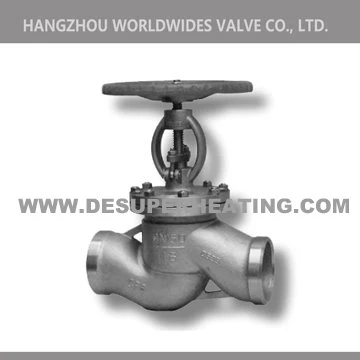
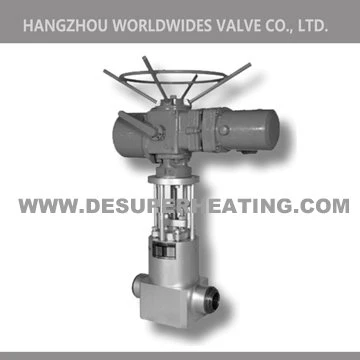
If you are in need of high - quality globe valves for your specific application, we are here to assist you. Our team of experts can help you select the right valve based on your requirements and provide you with comprehensive technical support. Whether you need a High Pressure Steam Motorized Globe Valve or a Carbon Steel Globe Valve, we have a wide range of products to meet your needs. Contact us today to start a discussion about your valve requirements and explore the best solutions for your business.
References
- Crane Co., "Flow of Fluids Through Valves, Fittings, and Pipe," Technical Paper No. 410.
- ASME B16.34, "Valves - Flanged, Threaded, and Welded End."
- Valve Manufacturers Association of America, various publications on valve technology.



