

Hey there! As a globe valve supplier, I've been getting a lot of questions lately about the installation clearances required for globe valves. So, I thought I'd put together this blog post to share some insights on this topic.
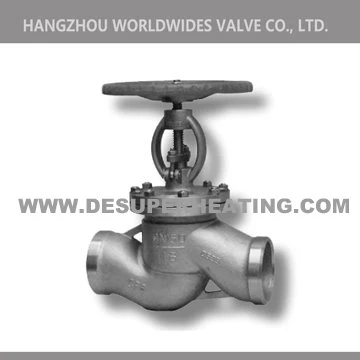
First off, let's talk about what a globe valve is. A globe valve is a type of valve used for regulating flow in a pipeline. It consists of a movable disk-type element and a stationary ring seat in a generally spherical body. Globe valves are widely used in various industries, including oil and gas, power generation, water treatment, and more.
Now, when it comes to installing a globe valve, one of the most important things to consider is the installation clearance. Installation clearance refers to the space required around the valve for proper installation, operation, maintenance, and inspection. Getting the installation clearance right is crucial as it can affect the performance and lifespan of the valve.
Side Clearance
One of the key aspects of installation clearance is the side clearance. You need to ensure there's enough space on the sides of the globe valve. This space is essential for easy access during installation and maintenance. For instance, if you need to remove the valve bonnet for inspection or repair, you'll need sufficient side clearance to work comfortably.
As a general rule of thumb, I'd recommend having at least 1.5 times the valve's nominal diameter as side clearance on each side. So, if you're installing a 6-inch globe valve, you should aim for at least 9 inches of clearance on each side. This will give you enough room to maneuver tools and perform any necessary tasks.
Top Clearance
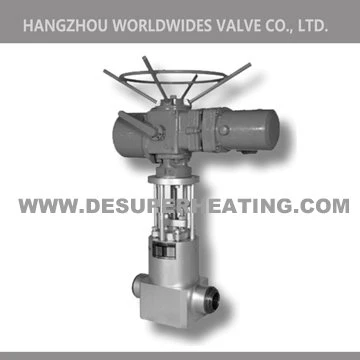
Top clearance is another important factor. The top of the globe valve needs enough space for the valve stem to move freely and for any actuators or accessories to be installed and operated. If you're using a manual globe valve, you'll need to be able to turn the handwheel easily. And if it's a motorized valve, like our High Pressure Steam Motorized Globe Valve, there should be enough space for the motor and control equipment.
I suggest having a top clearance of at least 2 times the valve's height. This allows for proper operation and also makes it easier to access the valve for any adjustments or replacements.
Bottom Clearance
Don't forget about the bottom clearance! You need to ensure that there's enough space below the valve to prevent any interference with the pipeline or other equipment. If the valve has a drain or a blowdown connection at the bottom, having adequate bottom clearance is even more important. It should be at least 1 times the valve's nominal diameter.
Inlet and Outlet Clearance
The inlet and outlet of the globe valve also require proper clearance. On the inlet side, you need to make sure that there's enough space for the fluid to flow smoothly into the valve without any obstructions. A straight pipe run of at least 5 - 10 times the valve's nominal diameter before the valve inlet is often recommended. This helps to ensure a uniform flow profile and reduces the risk of turbulence.
On the outlet side, a similar straight pipe run is beneficial. It allows the fluid to flow away from the valve without causing any backpressure or other flow-related issues. A straight pipe run of 3 - 5 times the valve's nominal diameter after the valve outlet is a good guideline.
Considerations for Different Valve Sizes and Types
The installation clearances can vary depending on the size and type of the globe valve. Larger valves generally require more clearance due to their physical dimensions. For example, a large Carbon Steel Globe Valve may need more side, top, and bottom clearance compared to a smaller one.
Also, different types of globe valves, such as angle globe valves or Y-pattern globe valves, may have specific clearance requirements. Angle globe valves, for instance, may need different side and top clearances due to their unique shape. It's important to refer to the manufacturer's installation instructions for the specific valve you're using.
Importance of Following Manufacturer's Instructions
Manufacturer's instructions are your best friend when it comes to installing a globe valve. We, as a globe valve supplier, provide detailed installation guidelines for each of our valves. These instructions take into account all the technical specifications and requirements of the valve, including the installation clearances.
Ignoring the manufacturer's instructions can lead to problems such as improper valve operation, reduced valve lifespan, and even safety hazards. So, always make sure to read and follow the instructions carefully.
Impact of Installation Clearance on Valve Performance
Getting the installation clearance right has a direct impact on the performance of the globe valve. If there's not enough clearance, it can cause issues like restricted valve movement, increased wear and tear, and poor flow control. For example, if the top clearance is insufficient, the valve stem may not be able to move fully, which can affect the valve's ability to open and close properly.
On the other hand, proper installation clearance ensures smooth operation, accurate flow control, and a longer valve lifespan. It allows the valve to function as intended and reduces the need for frequent maintenance and repairs.
Real - World Examples
I've seen many cases where improper installation clearance has caused problems. One of my customers installed a large globe valve in a tight space without considering the side clearance. When they needed to perform maintenance on the valve, they had a hard time accessing the valve bonnet. They had to remove some adjacent equipment just to get to the valve, which was a time - consuming and costly process.
In contrast, another customer followed our installation clearance guidelines carefully when installing a set of globe valves in their water treatment plant. The valves have been operating smoothly for years, with minimal maintenance required.
Conclusion
In conclusion, installation clearances are a crucial aspect of installing a globe valve. Side, top, bottom, inlet, and outlet clearances all need to be carefully considered to ensure proper valve operation, performance, and longevity. Different valve sizes and types may have specific clearance requirements, so always refer to the manufacturer's instructions.
If you're in the market for globe valves and need more information about installation clearances or any other aspects of our products, don't hesitate to reach out. We're here to help you make the right choice and ensure a successful installation. Whether you're looking for a Carbon Steel Globe Valve or a High Pressure Steam Motorized Globe Valve, we've got you covered.
Let's work together to find the perfect globe valve solution for your needs. Contact us today to start the conversation!
References
- ASME B16.34 - Valves - Flanged, Threaded, and Welding End
- API 602 - Compact Steel Gate, Globe, and Check Valves



