

As a seasoned supplier of steam desuperheaters, I've witnessed firsthand the critical role that installation position plays in the overall performance of these essential industrial components. A steam desuperheater is a device used to reduce the temperature of superheated steam by injecting water into the steam flow. This process is crucial in various industries, including power generation, chemical processing, and food production, where precise steam temperature control is necessary for optimal operation and product quality.
The Basics of Steam Desuperheaters
Before delving into the impacts of installation position, it's essential to understand the basic principles of steam desuperheaters. There are two main types of desuperheaters: direct contact and surface. Direct contact desuperheaters inject water directly into the steam flow, where it evaporates and cools the steam. Surface desuperheaters, on the other hand, use a heat exchanger to transfer heat from the steam to a cooling medium, such as water or air.
Regardless of the type, the primary goal of a desuperheater is to achieve efficient and accurate temperature control. This requires proper design, installation, and operation of the desuperheater. One of the most critical factors in achieving optimal performance is the installation position of the desuperheater.
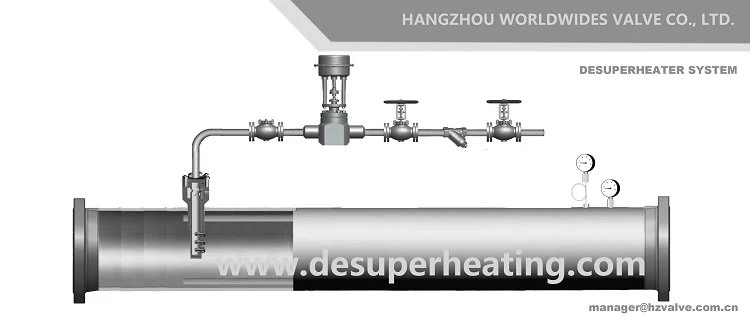

Impact on Mixing Efficiency
The installation position of a steam desuperheater significantly affects the mixing efficiency of the injected water and the steam. In direct contact desuperheaters, proper mixing is essential for complete evaporation of the water and uniform temperature reduction across the steam flow. If the desuperheater is installed too close to the steam source or in a location with high steam velocity, the water may not have sufficient time to mix thoroughly with the steam. This can result in incomplete evaporation, uneven temperature distribution, and the formation of water droplets in the steam, which can cause erosion and damage to downstream equipment.
Conversely, if the desuperheater is installed too far downstream or in a location with low steam velocity, the water may settle out of the steam flow before it has a chance to evaporate. This can lead to poor temperature control and the accumulation of water in the steam lines, which can cause water hammer and other operational issues.
To ensure optimal mixing efficiency, the desuperheater should be installed in a location where the steam flow is relatively uniform and the velocity is within the recommended range. This typically requires careful consideration of the steam system layout, including the size and shape of the pipes, the presence of bends and elbows, and the location of other equipment.
Impact on Pressure Drop
Another important consideration when installing a steam desuperheater is the impact on pressure drop. Pressure drop refers to the reduction in pressure that occurs as the steam flows through the desuperheater. This is a natural consequence of the injection of water into the steam flow and the resulting change in fluid properties.
The installation position of the desuperheater can have a significant impact on the pressure drop. If the desuperheater is installed in a location with high steam velocity or in a pipe with a small diameter, the pressure drop may be higher than expected. This can result in increased energy consumption and reduced system efficiency.
On the other hand, if the desuperheater is installed in a location with low steam velocity or in a pipe with a large diameter, the pressure drop may be lower than desired. This can lead to poor mixing efficiency and incomplete evaporation of the water, as discussed earlier.
To minimize pressure drop and ensure optimal performance, the desuperheater should be installed in a location where the steam velocity and pipe diameter are appropriate for the design of the desuperheater. This may require the use of expansion joints or other flow control devices to adjust the steam flow and pressure.
Impact on Temperature Control
The installation position of a steam desuperheater also affects its ability to provide accurate and stable temperature control. In a well-designed steam system, the desuperheater should be able to maintain the desired steam temperature within a narrow range, even under varying operating conditions.
If the desuperheater is installed too close to the steam source or in a location with high steam temperature fluctuations, it may be difficult to achieve precise temperature control. This is because the desuperheater may not have sufficient time to respond to changes in steam temperature or may be affected by the high temperature of the incoming steam.
Conversely, if the desuperheater is installed too far downstream or in a location with low steam temperature fluctuations, it may overcompensate for small changes in steam temperature, resulting in unstable temperature control and unnecessary energy consumption.
To ensure accurate and stable temperature control, the desuperheater should be installed in a location where the steam temperature is relatively stable and the desuperheater has sufficient time to respond to changes in steam conditions. This may require the use of temperature sensors and control valves to monitor and adjust the injection of water into the steam flow.
Impact on Maintenance and Reliability
Finally, the installation position of a steam desuperheater can have a significant impact on its maintenance and reliability. In a harsh industrial environment, the desuperheater may be exposed to a variety of contaminants, such as dirt, dust, and chemicals, which can cause corrosion, erosion, and other forms of damage.
If the desuperheater is installed in a location that is difficult to access or maintain, it may be more prone to damage and require more frequent repairs and replacements. This can result in increased downtime and maintenance costs for the steam system.
On the other hand, if the desuperheater is installed in a location that is easily accessible and provides adequate space for maintenance and inspection, it can be more easily monitored and maintained, reducing the risk of damage and extending its service life.
To ensure long-term reliability and performance, the desuperheater should be installed in a location that is easily accessible and provides a clean and dry environment. This may require the use of protective enclosures or other measures to prevent contamination and damage to the desuperheater.
Conclusion
In conclusion, the installation position of a steam desuperheater has a significant impact on its performance, including mixing efficiency, pressure drop, temperature control, and maintenance and reliability. As a supplier of Desuperheater, Geothermal Desuperheater, and Desuperheater In Boiler, I recommend that careful consideration be given to the installation position of the desuperheater to ensure optimal performance and long-term reliability.
If you are considering the installation of a steam desuperheater in your industrial process, I encourage you to contact me to discuss your specific requirements and to learn more about our range of desuperheater products and services. Our team of experienced engineers and technicians can provide you with expert advice and support to help you select the right desuperheater for your application and to ensure its proper installation and operation.
Don't let the wrong installation position compromise the performance of your steam desuperheater. Contact me today to start a conversation about how we can help you achieve precise steam temperature control and improve the efficiency and reliability of your industrial process.
References
- Smith, J. (2019). Steam Desuperheaters: Design, Operation, and Maintenance. Industrial Press.
- Johnson, M. (2020). Principles of Steam Temperature Control. ASME Press.
- Brown, S. (2021). Optimizing Steam Desuperheater Performance. Chemical Engineering Magazine.



