

When it comes to heater safety valves, understanding the differences between direct - acting and pilot - operated types is crucial for ensuring the safety and efficiency of heating systems. As a leading supplier of heater safety valves, I've witnessed firsthand the importance of these distinctions in various industrial and commercial applications.
Direct - Acting Heater Safety Valves
Direct - acting safety valves are relatively simple in design and operation. They rely on a spring - loaded mechanism to control the opening and closing of the valve. The spring exerts a force on a disc, which seals the valve outlet. When the pressure in the system exceeds the set pressure of the spring, the force exerted by the pressure overcomes the spring force, and the disc lifts, allowing the excess pressure to be relieved.
One of the key advantages of direct - acting safety valves is their simplicity. With fewer components, they are generally more reliable and less prone to failure. They are also relatively inexpensive to manufacture and maintain. This makes them a popular choice for small - scale heating systems or applications where cost is a significant factor.
However, direct - acting valves have some limitations. Their capacity to relieve large amounts of pressure quickly is somewhat restricted. As the valve opens, the spring is compressed further, which means that the opening force increases as the valve lift increases. This can result in a phenomenon known as "chattering," where the valve rapidly opens and closes, potentially causing damage to the valve and the system. Additionally, direct - acting valves may not be as accurate in maintaining a precise set pressure, especially in high - pressure or high - temperature applications.

Pilot - Operated Heater Safety Valves
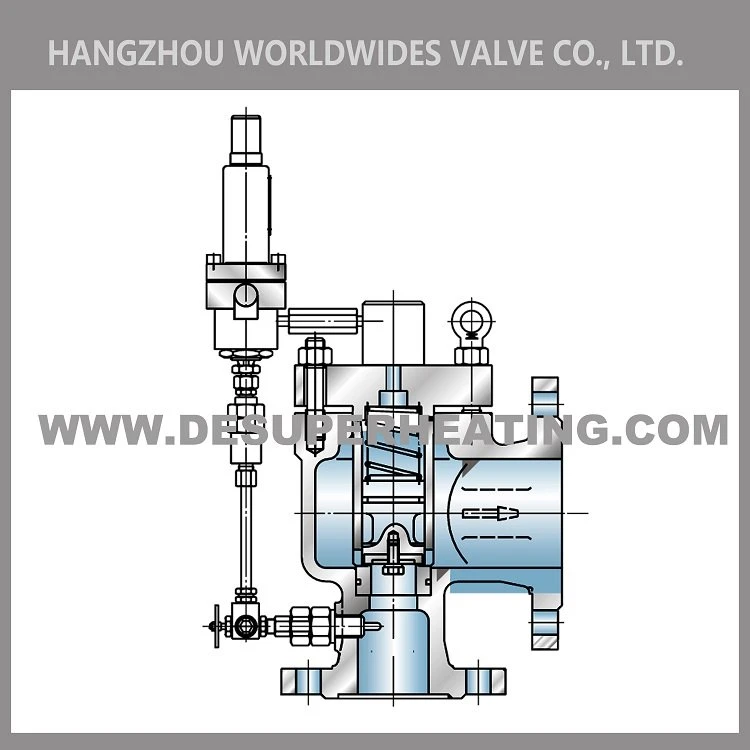
In contrast, pilot - operated safety valves are more complex but offer several advantages in certain situations. A pilot - operated valve consists of a main valve and a pilot valve. The pilot valve senses the pressure in the system and controls the opening and closing of the main valve. When the system pressure reaches the set point, the pilot valve opens, allowing the pressure to act on a piston or diaphragm in the main valve, which then opens to relieve the excess pressure.
One of the main benefits of pilot - operated valves is their high capacity for relieving pressure. They can open fully and quickly, making them suitable for large - scale heating systems or applications where rapid pressure relief is required. Pilot - operated valves also tend to be more accurate in maintaining the set pressure. The pilot valve can be finely tuned to respond precisely to changes in pressure, ensuring that the main valve opens and closes at the desired pressure levels.
Another advantage is that pilot - operated valves can operate at very high pressures and temperatures. The design of the valve allows it to handle extreme conditions without sacrificing performance. Additionally, pilot - operated valves are less likely to chatter compared to direct - acting valves, which helps to extend the lifespan of the valve and reduce maintenance requirements.
However, pilot - operated valves are more complex and expensive than direct - acting valves. They require more sophisticated installation and maintenance procedures, and any malfunction in the pilot valve can affect the operation of the entire system.
Applications
The choice between a direct - acting and a pilot - operated heater safety valve depends on several factors, including the size and type of the heating system, the operating pressure and temperature, and the required flow capacity.
For small - scale heating systems, such as domestic boilers or small industrial heaters, direct - acting safety valves are often sufficient. They provide reliable protection at a lower cost and are easy to install and maintain. For example, in a small - scale hot water heating system, a direct - acting Pressure Safety Valve can effectively prevent over - pressurization and ensure the safety of the system.
On the other hand, large - scale industrial heating systems, such as power plants or large steam boilers, typically require the high - capacity and precise control offered by pilot - operated valves. In a high - pressure steam boiler, a High Pressure Steam Boiler Safety Valve of the pilot - operated type can quickly relieve excess pressure and prevent dangerous situations.
In applications where there is a risk of sudden pressure surges, such as in chemical processing plants or refineries, pilot - operated valves are also preferred. They can respond rapidly to changes in pressure and provide reliable protection against over - pressurization. For example, a Co2 Pressure Relief Valve of the pilot - operated type can ensure the safe release of carbon dioxide in case of over - pressurization in a CO2 storage system.
Quality and Certification
As a heater safety valve supplier, we understand the importance of providing high - quality products that meet international standards. All our direct - acting and pilot - operated safety valves are manufactured using the latest technology and undergo rigorous testing to ensure their performance and reliability.
We hold various certifications, such as ASME (American Society of Mechanical Engineers) and ISO (International Organization for Standardization), which demonstrate our commitment to quality and safety. These certifications ensure that our valves are designed and manufactured to the highest standards and can be trusted to provide reliable protection in a wide range of applications.
Choosing the Right Supplier
Selecting the right supplier for heater safety valves is essential. A reliable supplier should not only offer high - quality products but also provide excellent customer service and technical support. At our company, we have a team of experienced engineers who can help you choose the right valve for your specific application. We can also provide installation guidance, maintenance tips, and troubleshooting assistance.
Contact for Purchase and Negotiation
If you are in the market for heater safety valves, whether it's a direct - acting or a pilot - operated valve, we are here to help. Our extensive range of products can meet the needs of various industries and applications. We are committed to providing you with the best products at competitive prices. Contact us today to start the procurement negotiation process and ensure the safety and efficiency of your heating system.
References
- ASME Boiler and Pressure Vessel Code
- ISO Standards for Industrial Valves
- Engineering Handbook on Pressure Relief Valves



