

In the realm of industrial steam management, the choice of a steam conditioning system is a critical decision that can significantly impact the efficiency, safety, and cost - effectiveness of operations. As a supplier of Desuperheating System, I am well - versed in the intricacies of these systems and how they stack up against other steam conditioning alternatives. In this blog post, I will delve into a comprehensive comparison of desuperheater systems with other common steam conditioning setups.
Understanding Steam Conditioning
Before we start comparing different systems, it's essential to understand the concept of steam conditioning. Steam conditioning is the process of altering the properties of steam, such as its temperature, pressure, and quality, to meet the specific requirements of industrial processes. This can involve reducing superheat, adjusting pressure, or improving steam dryness. The goal is to ensure that the steam used in various applications, from power generation to manufacturing, is in the optimal state for maximum efficiency and equipment longevity.
Desuperheater Systems: An Overview
A Desuperheating System is designed primarily to reduce the temperature of superheated steam. Superheated steam is steam that has been heated to a temperature higher than its saturation point at a given pressure. While superheated steam has its uses, many industrial processes require steam at a lower, more controlled temperature.
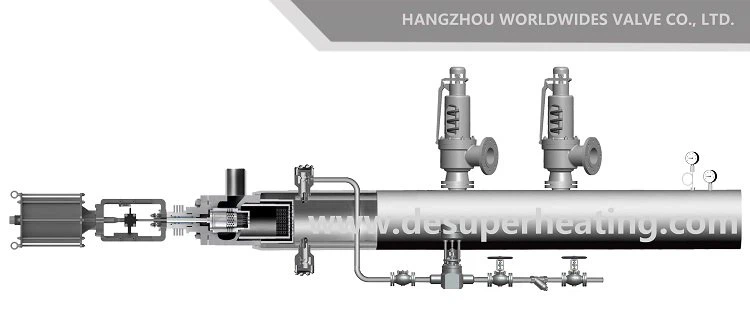
Desuperheaters work by injecting a controlled amount of water into the superheated steam. The water absorbs the excess heat from the steam, causing it to condense and reducing the steam's temperature. There are different types of desuperheaters, including direct contact desuperheaters and surface desuperheaters. Direct contact desuperheaters mix the water directly with the steam, while surface desuperheaters transfer heat through a heat - exchange surface.
Comparison with Other Steam Conditioning Systems
1. Pressure Reducing Valves (PRVs)
Pressure Reducing Valves are commonly used to reduce the pressure of steam in a system. Unlike desuperheaters, which focus on temperature reduction, PRVs are mainly concerned with pressure management.
Advantages of Desuperheaters over PRVs:
- Temperature Control: PRVs do not have the ability to control the temperature of the steam. When steam pressure is reduced through a PRV, the steam may still be superheated, which can be problematic for downstream equipment. Desuperheaters, on the other hand, can precisely control the steam temperature, ensuring that the steam is at the right condition for the process.
- Process Compatibility: Many industrial processes require steam at a specific temperature - pressure combination. A desuperheater can be used in conjunction with a PRV to achieve the desired steam properties, providing a more comprehensive solution for steam conditioning.
Disadvantages of Desuperheaters compared to PRVs:

- Complexity: Desuperheaters are generally more complex than PRVs. They require a water injection system, control valves, and a means of measuring and controlling the steam temperature. This complexity can lead to higher installation and maintenance costs.
- Water Dependency: Desuperheaters rely on a supply of water for temperature reduction. If the water supply is interrupted or of poor quality, it can affect the performance of the desuperheater. PRVs, in contrast, do not have this water - dependency.
2. Pressure Reducing Desuperheating System
A Pressure Reducing Desuperheating System combines the functions of a pressure - reducing valve and a desuperheater in a single unit.
Advantages of Stand - Alone Desuperheaters over Pressure Reducing Desuperheating Systems:
- Flexibility: A stand - alone desuperheater can be easily integrated into an existing steam system. It can be used in combination with different types of pressure - reducing devices, allowing for a more customized solution based on the specific requirements of the process. In contrast, a combined pressure - reducing desuperheating system may have limitations in terms of its compatibility with other system components.
- Cost - Efficiency for Specific Applications: In some cases, where only temperature control is required and the existing pressure - reducing setup is sufficient, a stand - alone desuperheater can be a more cost - effective option. This is because there is no need to invest in a combined system that includes pressure - reducing capabilities that may not be necessary.
Disadvantages of Stand - Alone Desuperheaters compared to Pressure Reducing Desuperheating Systems:
- Space and Installation: A combined pressure - reducing desuperheating system typically requires less space and is easier to install compared to a stand - alone desuperheater and a separate pressure - reducing valve. This can be an important factor in industrial settings where space is limited.
- Integrated Control: Pressure Reducing Desuperheating Systems often come with integrated control systems that can optimize both pressure and temperature simultaneously. Stand - alone desuperheaters may require additional control equipment and programming to achieve the same level of coordinated control.
3. Geothermal Desuperheater
Geothermal desuperheaters are specifically designed for use in geothermal power plants. These plants use steam generated from geothermal sources, which often have unique characteristics.
Advantages of General Desuperheaters over Geothermal Desuperheaters:
- Versatility: General desuperheaters can be used in a wide range of industrial applications, not just geothermal power plants. They are suitable for steam systems in chemical plants, food processing facilities, and many other industries. Geothermal desuperheaters, on the other hand, are tailored to the specific requirements of geothermal steam, such as its high mineral content and unique pressure - temperature profiles.
- Availability and Support: As general desuperheaters are more commonly used, there is a larger pool of suppliers, technicians, and spare parts available. This can lead to faster response times for maintenance and repairs, as well as more competitive pricing for replacement components.
Disadvantages of General Desuperheaters compared to Geothermal Desuperheaters:
- Geothermal - Specific Design: Geothermal desuperheaters are designed to handle the specific challenges associated with geothermal steam, such as corrosion from minerals and the need for precise temperature control in a high - pressure environment. General desuperheaters may not be as effective or durable when used in a geothermal setting.
Factors to Consider When Choosing a Steam Conditioning System
When selecting a steam conditioning system, several factors should be taken into account:
1. Process Requirements
The specific requirements of the industrial process are the most important consideration. If the process requires precise temperature control, a desuperheater or a combined pressure - reducing desuperheating system may be necessary. If pressure reduction is the primary concern, a PRV may be sufficient.
2. Cost
Cost is always a significant factor. This includes the initial purchase cost, installation cost, and long - term maintenance and operating costs. A more complex system like a desuperheater may have a higher upfront cost but could result in savings in the long run due to improved process efficiency.
3. Space Constraints
The available space in the industrial facility can limit the choice of steam conditioning system. A combined pressure - reducing desuperheating system may be a better option if space is limited, while a stand - alone desuperheater and PRV combination may be more suitable for larger facilities.
4. Water Availability and Quality
If a desuperheater is being considered, the availability and quality of water are crucial. A reliable water supply with the appropriate chemical composition is necessary for the proper functioning of the desuperheater.
Conclusion
In conclusion, desuperheater systems offer unique advantages in terms of temperature control, but they also come with their own set of challenges. When compared to other steam conditioning systems such as PRVs, Pressure Reducing Desuperheating Systems, and Geothermal Desuperheaters, the choice depends on a variety of factors, including process requirements, cost, space, and water availability.
As a supplier of Desuperheating System, I understand the importance of making the right choice for your steam conditioning needs. If you are looking for a reliable and efficient steam conditioning solution, I encourage you to reach out for a detailed consultation. Our team of experts can help you evaluate your requirements and select the most suitable system for your industrial process. Whether you need a simple desuperheater or a more complex pressure - reducing desuperheating system, we have the expertise and products to meet your needs. Contact us today to start the conversation about optimizing your steam management.
References
- Smith, J. (2018). Industrial Steam Conditioning: Principles and Practices. New York: Industrial Press.
- Brown, A. (2020). Steam System Design and Operation. London: Elsevier.
- Green, R. (2019). Geothermal Power Plant Technology. Berlin: Springer.



