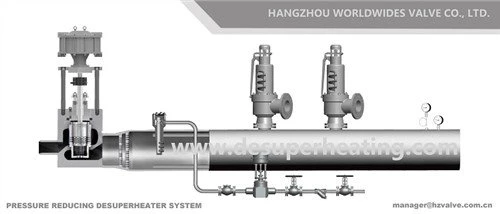
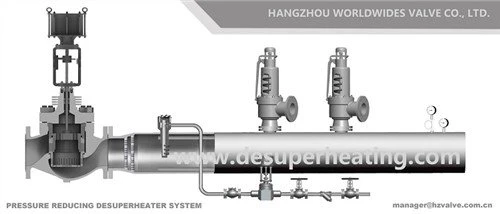
Saturated steam is used in most of the heating process, so in the steam system we will often see the pressure reducing valve. In the production site, we sometimes encounter problems such as pressure fluctuation after pressure reducing valve, unstable heating, overpressure of pressure reducing valve, safety valve jumping, etc. So how do we configure the decompression system correctly to achieve good decompression effect and stability?
Common steam pressure reducing valves are mainly pilot operated and direct operated.
Pilot pressure reducing valve has pilot diaphragm type and pilot piston type. Pilot type pressure reducing valve is through the pilot valve to detect the secondary pressure, control pressure drive operating components, such as control piston or diaphragm to open and close the main valve.
The pilot diaphragm type pressure reducing valve is suitable for the equipment, facilities and piping systems requiring high flow and stable pressure control. Its characteristic is that it can precisely control the tiny change of pressure or the facilities with violent fluctuation of flow. When selecting this kind of pressure reducing valve, the diameter of the pressure reducing valve is 1-2 grades smaller than that of the pipeline. If we select the pressure reducing valve according to the diameter of the pipeline, the diameter of the pressure reducing valve will be too large, resulting in that the valve is often in a small opening, the valve core is too close to the valve seat, erosion will occur when wet steam flows through, and the service life will be shortened. In addition, any small movement of the spool will lead to large fluctuations of the flow through the valve, and it is difficult for the valve to accurately control the pressure. When the pressure reduction ratio is large or the flow rate is large, multiple valves can be used in series or in parallel.
The pilot piston pressure reducing valve uses the piston as the pressure element to ensure the stability of control and excellent durability. It is suitable for equipment, facilities and piping system with medium and low flow.
Direct acting pressure reducing valve directly starts the valve by its pressure reducing sensing function. The direct acting type is easy to be affected by the change of flow rate, but it is small and suitable for small equipment with stable flow rate.
To select the above steam pressure reducing valve, the following parameters should be provided: inlet pressure (temperature), outlet pressure, flow rate, inlet pipe diameter and outlet pipe diameter.
The quality of steam will affect the stability of the pressure reducing valve, so it is recommended that the steam pressure reducing system be configured in the following way:
1. Steam water separator: it can effectively separate the moisture in the steam, prevent water hammer and erosion caused by moisture, and affect the service life of the pressure reducing valve.
2. Front and rear stop valves: used for front and rear cut-off during repair and maintenance;
3. Filter: to prevent impurities causing pressure reducing valve stuck;
4. Safety valve: to prevent overpressure and ensure safety;
5. Pressure gauge: used for pressure reducing valve debugging.