

Hey there! As a supplier of Pressure Reducing Systems, I've seen firsthand how crucial pressure gauges are in these setups. Let's dig into what role a pressure gauge plays in a Pressure Reducing System.
First off, what's a Pressure Reducing System? Well, it's a setup that takes high - pressure fluid (could be steam, gas, or liquid) and reduces it to a lower, more manageable pressure. This is super important in a bunch of industries, like manufacturing, power generation, and even in our homes for things like water supply.
Now, let's talk about the pressure gauge. At its most basic, a pressure gauge is a device that measures the pressure of the fluid in the system. It's like a little detective that tells you what's going on inside the pipes and valves.
One of the main roles of a pressure gauge in a Pressure Reducing System is monitoring. You see, the whole point of a Pressure Reducing System is to maintain a specific output pressure. The pressure gauge constantly keeps an eye on the pressure levels at different points in the system. For example, it can measure the inlet pressure (the high - pressure fluid coming into the system) and the outlet pressure (the reduced - pressure fluid leaving the system).
Let's say you've got a High Steam Pressure Reducing Desuperheater. This is a complex piece of equipment that not only reduces the pressure of steam but also removes excess heat. The pressure gauge on this system will let you know if the steam pressure is too high at the inlet. If it is, it could mean there's a problem upstream, like a blockage or a malfunction in the supply line.
On the other hand, if the outlet pressure is off, it could indicate an issue with the reducing mechanism itself. Maybe the valve isn't opening or closing properly, or there's a leak in the system. By constantly monitoring the pressure, the pressure gauge helps you catch these problems early before they turn into major headaches.
Another vital role of the pressure gauge is in system calibration. When you install a new Pressure Reducing System or make adjustments to an existing one, you need to set it up to achieve the right output pressure. The pressure gauge is your key tool here. You can use it to fine - tune the settings of the system, like adjusting the opening of a Steam Pressure Regulating Valve.
Let's say you want the output pressure to be exactly 50 psi. You can look at the pressure gauge reading and make small adjustments to the valve until the gauge shows the desired pressure. This ensures that the system is working efficiently and safely.
Safety is also a huge deal when it comes to Pressure Reducing Systems, and the pressure gauge plays a big part in that. In a high - pressure system, if the pressure gets too high, it can cause serious damage to the equipment, lead to leaks, or even result in an explosion. The pressure gauge acts as an early warning system. If the pressure starts to rise above the safe limits, you can take immediate action, like shutting down the system or making emergency adjustments.
For instance, a High Pressure Steam Regulator is designed to handle high - pressure steam. But if the pressure gauge shows that the pressure is spiking beyond what the regulator can handle, you can quickly cut off the steam supply or take other safety measures.
In addition to monitoring, calibration, and safety, the pressure gauge also helps with system performance evaluation. Over time, you can look at the pressure readings and analyze how the system is performing. If you notice that the pressure is fluctuating more than usual, it could mean that the system is wearing out or that there are changes in the operating conditions.
You can also use the pressure gauge data to compare the actual performance of the system with the design specifications. This can help you identify areas where the system could be improved, like upgrading certain components or changing the operating procedures.

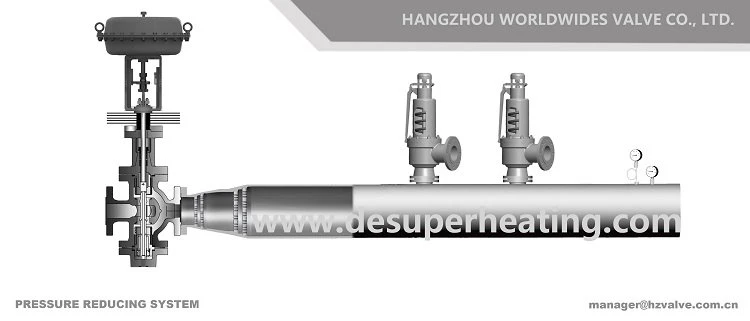
Now, let's talk about the types of pressure gauges used in Pressure Reducing Systems. There are several types, but the most common ones are mechanical and digital.
Mechanical pressure gauges are the old - school type. They usually use a Bourdon tube, which is a curved tube that straightens out when pressure is applied. This movement is then translated into a reading on a dial. These gauges are simple, reliable, and relatively inexpensive. They're great for basic monitoring in many applications.
Digital pressure gauges, on the other hand, use electronic sensors to measure pressure. They offer more accurate readings and can often be connected to a computer or a control system. This allows for remote monitoring and data logging, which is really useful for large - scale or complex Pressure Reducing Systems.
When choosing a pressure gauge for your Pressure Reducing System, there are a few things to consider. First, you need to make sure it can handle the pressure range of your system. If you've got a high - pressure system, you'll need a gauge that can measure high pressures accurately.
You also need to think about the environment in which the gauge will be used. If it's in a dirty or wet area, you'll want a gauge that's protected against dust and moisture. And of course, you'll want to consider the accuracy and reliability of the gauge.
In conclusion, the pressure gauge is an essential component of a Pressure Reducing System. It plays multiple roles, from monitoring and calibration to safety and performance evaluation. Without a reliable pressure gauge, it would be really tough to operate a Pressure Reducing System effectively and safely.
If you're in the market for a Pressure Reducing System or need to upgrade your existing one, we're here to help. We've got a wide range of high - quality systems and pressure gauges that can meet your specific needs. Whether you're dealing with steam, gas, or liquid, we've got the expertise to provide you with the right solution. Don't hesitate to reach out to us for a consultation and start the procurement process.
References
- "Industrial Pressure Measurement Handbook"
- "Pressure Reducing Systems: Principles and Applications"



