

Hey there! As a supplier of Compressor Safety Valves, I've been getting a lot of questions lately about how these little wonders actually work. So, I thought I'd take a few minutes to break it down for you in plain English.
First off, let's talk about why we even need Compressor Safety Valves. Compressors are used in all sorts of industries, from manufacturing to oil and gas. They work by taking in gas or air and squeezing it into a smaller space, which increases its pressure. This high-pressure gas or air can then be used for a variety of purposes, like powering machinery or filling tanks.
But here's the thing: if the pressure in the compressor gets too high, it can cause serious problems. It can damage the compressor itself, as well as any equipment that's connected to it. In some cases, it can even lead to explosions or other dangerous situations. That's where Compressor Safety Valves come in.
The basic idea behind a Compressor Safety Valve is pretty simple. It's a device that's designed to open up and release pressure when it reaches a certain level. This helps to prevent the pressure from getting too high and causing damage.
So, how does it actually work? Well, there are a few different types of Compressor Safety Valves, but most of them work on the same basic principle. Let's take a look at the most common type: the spring-loaded safety valve.
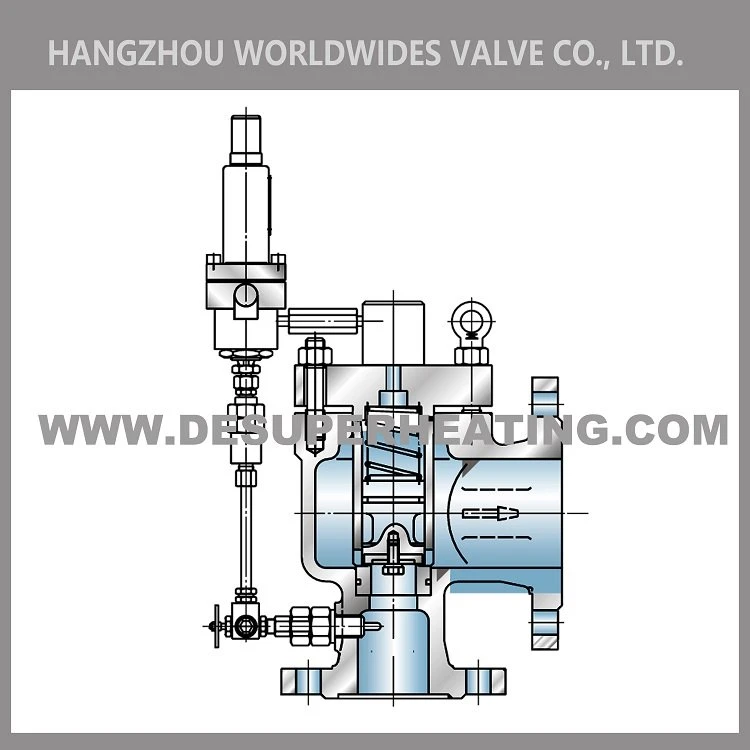
A spring-loaded safety valve consists of a valve body, a valve disc, a spring, and a seat. The valve body is the outer casing of the valve, and it has an inlet and an outlet. The valve disc is a flat or curved piece of metal that sits on top of the seat. The spring is located above the valve disc, and it applies a downward force to keep the valve closed.
When the pressure in the compressor reaches the set point of the safety valve, the force of the pressure pushing up on the valve disc becomes greater than the force of the spring pushing down. This causes the valve disc to lift off the seat, allowing the high-pressure gas or air to escape through the outlet.
Once the pressure has dropped below the set point, the force of the spring becomes greater than the force of the pressure, and the valve disc drops back down onto the seat, closing the valve. This helps to prevent any more gas or air from escaping.
It's important to note that the set point of the safety valve is carefully calibrated to ensure that it opens up at the right time. If the set point is too high, the valve may not open up in time to prevent damage. If the set point is too low, the valve may open up too often, which can cause unnecessary wear and tear on the valve and other equipment.

Another important factor to consider is the size of the safety valve. The size of the valve needs to be carefully selected based on the size and capacity of the compressor, as well as the maximum pressure that it's designed to handle. If the valve is too small, it may not be able to release the pressure quickly enough, which can cause the pressure to build up even more. If the valve is too large, it may open up too easily and release too much pressure, which can also cause problems.
In addition to spring-loaded safety valves, there are also other types of Compressor Safety Valves, such as Bellows Safety Valve. Bellows safety valves use a bellows element instead of a spring to control the opening and closing of the valve. These valves are often used in applications where there is a lot of vibration or where the pressure needs to be controlled very precisely.
There's also the Hot Water Heater Safety Valve, which is specifically designed for use in hot water heaters. These valves are designed to open up and release pressure if the temperature or pressure in the water heater gets too high, which helps to prevent the water heater from exploding.
And then there's the Co2 Pressure Relief Valve, which is used to release pressure from CO2 systems. These valves are designed to open up and release CO2 gas if the pressure in the system gets too high, which helps to prevent the system from exploding.
As a supplier of Compressor Safety Valves, I understand the importance of providing high-quality products that are reliable and safe. That's why we only use the best materials and the latest manufacturing techniques to produce our valves. We also offer a wide range of valves to meet the needs of different applications, and we can help you select the right valve for your specific requirements.
If you're in the market for a Compressor Safety Valve, or if you have any questions about how these valves work, please don't hesitate to get in touch with us. We'd be happy to help you find the right solution for your needs. Whether you're a small business or a large corporation, we have the expertise and the products to help you keep your equipment safe and running smoothly.
In conclusion, Compressor Safety Valves are an essential component of any compressor system. They help to prevent damage and ensure the safety of your equipment and your employees. By understanding how they work and selecting the right valve for your application, you can help to ensure that your compressor system operates safely and efficiently.
References
- "Safety Valve Handbook" by William A. Nash
- "Pressure Relief Valve Technology" by John P. Crowl and Daniel F. Louvar



