

Hey there, fellow industry enthusiasts! As a gate valve supplier, I often get asked about the different components of gate valves and their functions. One such crucial part is the bonnet. So, let's dive right in and explore what the function of the bonnet in a gate valve is.
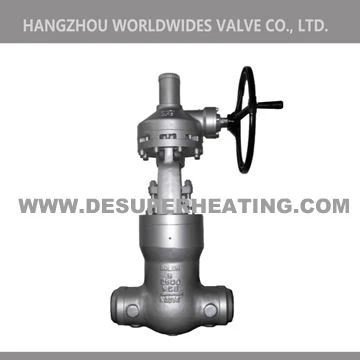

First off, you might be wondering what a bonnet even is. In simple terms, the bonnet is like the cap of the gate valve. It's the top - most part that covers the valve stem and the packing. You can think of it as the protective shield for the inner workings of the gate valve.
One of the primary functions of the bonnet is to provide a seal. It helps to prevent any leakage of the fluid or gas that the gate valve is controlling. When the bonnet is properly installed and tightened, it forms a tight connection with the valve body. This seal is crucial, especially when dealing with high - pressure or hazardous substances. If there's any leakage around the bonnet, it can lead to all sorts of problems, from minor inefficiencies to serious safety hazards.
Let's say you're using a gate valve in an industrial setting to control the flow of a chemical. Without a proper seal from the bonnet, that chemical could leak out into the environment, posing a risk to both the workers and the surrounding area. So, you can see why this sealing function is so important.
Another function of the bonnet is to house the valve stem packing. The packing is a material that surrounds the valve stem and helps to prevent fluid from leaking out along the stem as it moves. Think of it as a kind of gasket that keeps everything in place. The bonnet holds the packing in position and provides the necessary pressure to make sure it does its job effectively.
You see, as the valve stem moves up and down to open and close the gate, there's always a chance that fluid could seep out around it. The packing, held in place by the bonnet, creates a barrier that stops this from happening. And different types of packing materials can be used depending on the application, like graphite for high - temperature environments or PTFE for general - purpose use.
The bonnet also plays a role in providing access to the valve's internal components. During maintenance or repairs, you can remove the bonnet to get to the valve stem, the gate, or other parts that might need fixing or replacement. This access is vital because it allows technicians to carry out the necessary work without having to replace the entire valve.
Imagine if you had a problem with the gate inside the valve. Without a removable bonnet, you'd have to cut the valve out of the pipeline and replace it, which is a time - consuming and costly process. But with a bonnet that can be easily removed, you can simply open it up, fix the issue, and then put it back together.
Now, let's talk a bit about the different types of bonnets. There are several types, such as bolted bonnets, welded bonnets, and pressure - seal bonnets.
Bolted bonnets are probably the most common type. They're attached to the valve body using bolts and nuts. This makes them easy to remove and reinstall, which is great for maintenance. If you're working in a facility where regular valve inspections are required, a bolted bonnet is a good choice. You can check out our API 600 Flanged Industrial Gate Valve which often comes with a bolted bonnet for easy access.
Welded bonnets, on the other hand, are fused to the valve body. They provide a very strong and leak - tight connection, which is ideal for high - pressure applications. However, they're not as easy to remove as bolted bonnets, so maintenance can be a bit more challenging. Our API ANSI Steel Gate Valve might come with a welded bonnet for those tough, high - pressure jobs.
Pressure - seal bonnets are designed for applications where the pressure is extremely high. As the pressure inside the valve increases, the bonnet actually seals tighter against the valve body. This self - energizing feature makes them very reliable in high - pressure systems. We offer Steel Bevel Gear Industrial Gate Valve that might be equipped with a pressure - seal bonnet for such demanding situations.
In addition to these functions, the bonnet can also contribute to the overall strength and stability of the gate valve. It adds an extra layer of protection to the valve body and helps to distribute the pressure evenly across the valve. This is especially important in large - scale industrial applications where the valve might be subjected to significant stress.
As a gate valve supplier, we understand the importance of a well - functioning bonnet. That's why we make sure all our valves are designed with high - quality bonnets that can perform their functions effectively. We use advanced manufacturing techniques and the best materials to ensure that our bonnets can withstand the rigors of different industrial environments.
If you're in the market for gate valves and want to learn more about how the bonnet can impact the performance of the valve, or if you have any specific requirements for your project, don't hesitate to get in touch. We're here to help you find the perfect gate valve solution for your needs. Whether it's a simple bolted bonnet valve for a low - pressure application or a high - end pressure - seal bonnet valve for a critical high - pressure system, we've got you covered. So, reach out to us and let's start a conversation about your valve needs.
References
- Valve Handbook, Various industry - standard valve textbooks
- API standards related to gate valves (e.g., API 600)



