

Hey there! As a control valve supplier, I often get asked about the difference between a globe valve and a control valve. So, I thought I'd write this blog to clear up any confusion.
Let's start with the basics. A globe valve is a type of valve that uses a disk-shaped closure element that moves perpendicular to the flow path to regulate or stop the flow of fluid. It's called a "globe" valve because its body resembles a globe or a ball. Globe valves are commonly used in applications where a tight shut-off is required, like in pipelines for water, steam, or gas.
On the other hand, a control valve is a valve used to control fluid flow by varying the size of the flow passage as directed by a signal from a controller. This allows for precise control of process variables such as flow, pressure, temperature, and liquid level. Control valves are used in a wide range of industries, including oil and gas, chemical, power generation, and water treatment.
Design and Structure
One of the main differences between globe valves and control valves lies in their design and structure. Globe valves typically have a more straightforward design. They have a stem that moves the disk up and down to open or close the valve. The disk fits into a seat, and when the disk is fully seated, it stops the flow completely.
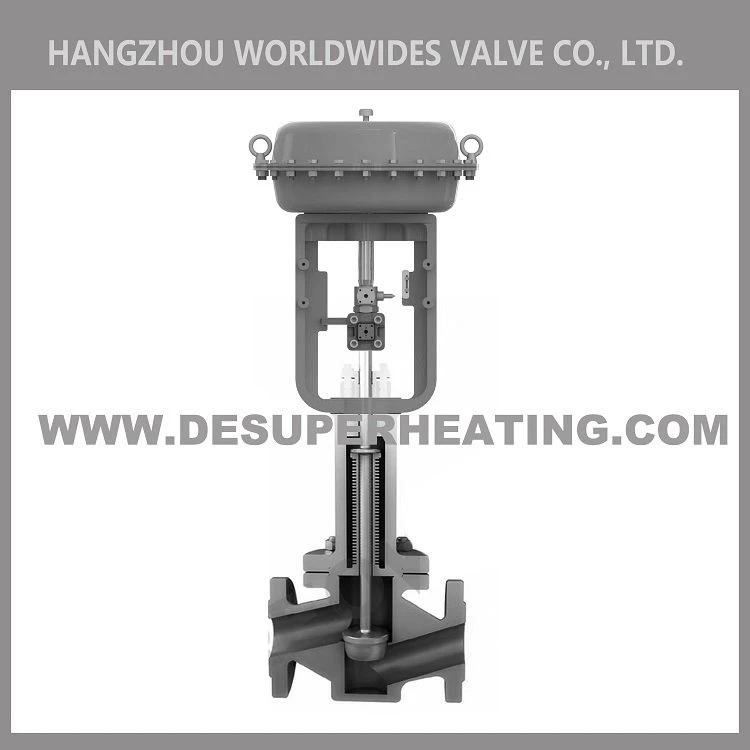
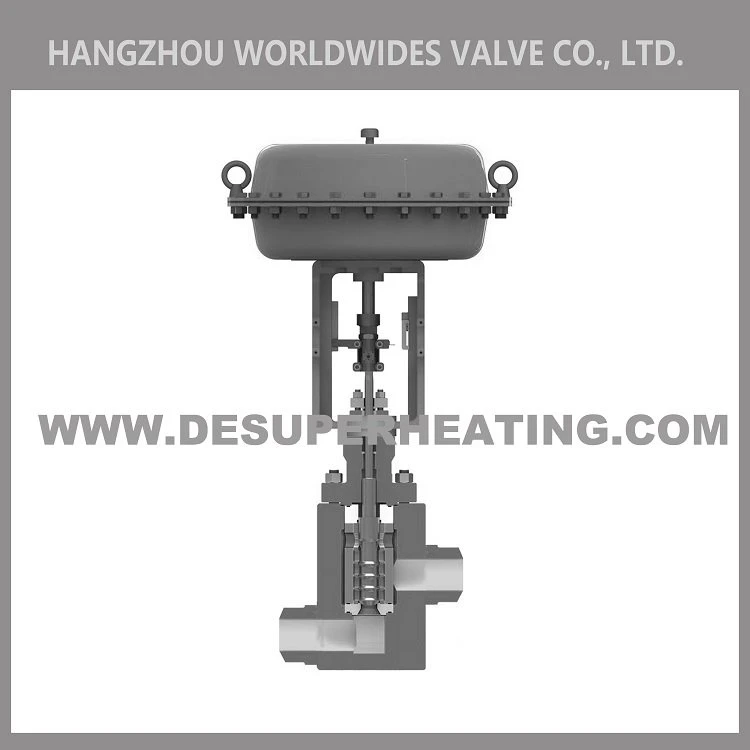
Control valves, however, are more complex. They often have a diaphragm or a piston actuator that is controlled by a signal from a controller. This actuator moves the valve plug or disk to adjust the flow rate. The design of control valves allows for more precise control over the flow, as they can be adjusted to very small increments.
Flow Characteristics
Another significant difference is in their flow characteristics. Globe valves have a relatively high pressure drop compared to control valves. This is because the flow has to change direction as it passes through the valve, which causes more resistance. Globe valves are generally better suited for on-off applications or where a simple flow control is needed.
Control valves, on the other hand, are designed to have a more predictable and adjustable flow characteristic. They can be designed to have different flow characteristics, such as linear, equal percentage, or quick opening, depending on the application. This makes them ideal for applications where precise control of the flow rate is required, like in a chemical process where the exact amount of a reagent needs to be added.
Applications
The applications of globe valves and control valves also differ. Globe valves are commonly used in general-purpose applications where a simple shut-off or basic flow control is needed. For example, they are often used in residential and commercial plumbing systems to control the flow of water. They are also used in some industrial applications where a tight shut-off is required, such as in steam systems.
Control valves, on the other hand, are used in more critical and complex applications. In the oil and gas industry, control valves are used to control the flow of oil and gas in pipelines, refineries, and offshore platforms. In the power generation industry, they are used to control the flow of steam and water in boilers and turbines.
We offer a wide range of control valves to meet different application needs. For instance, our Large Capacity Steam Pressure Reducing Valve is designed for applications where a large amount of steam needs to be regulated at a reduced pressure. Our Pilot Operated Pressure Control Valve provides precise pressure control in various industrial processes. And our Sprayer Control Valve is perfect for applications where a fine mist or spray needs to be controlled, like in agricultural sprayers or industrial painting systems.
Cost
Cost is also a factor to consider. Globe valves are generally less expensive than control valves. This is because of their simpler design and construction. If you only need a basic valve for on-off control, a globe valve might be the more cost-effective option.
Control valves, however, are more expensive due to their complex design and the need for additional components like actuators and controllers. But the cost is often justified by the precision and reliability they offer in critical applications.
Maintenance
Maintenance requirements also differ between the two types of valves. Globe valves are relatively easy to maintain. They usually have fewer moving parts, and the disk and seat can be easily replaced if they wear out.
Control valves, on the other hand, require more maintenance. The actuators and controllers need to be regularly calibrated and checked for proper operation. The valve internals also need to be inspected and maintained to ensure accurate flow control.
In conclusion, while both globe valves and control valves are used to control the flow of fluids, they have distinct differences in design, flow characteristics, applications, cost, and maintenance. If you need a simple on-off valve or basic flow control, a globe valve might be the right choice. But if you require precise control of process variables in a critical application, a control valve is the way to go.
If you're in the market for control valves or have any questions about which valve is right for your application, don't hesitate to reach out. We're here to help you find the best solution for your needs. Whether it's for a small-scale project or a large industrial installation, we have the expertise and the products to meet your requirements.
References
- Valve Handbook, 4th Edition by Leo K. Strobel
- Control Valve Application by Emerson Process Management



