

Hey there! As a supplier of Industry Control Valves, I often get asked about the communication protocols for these valves. So, I thought I'd break it down for you in this blog post.
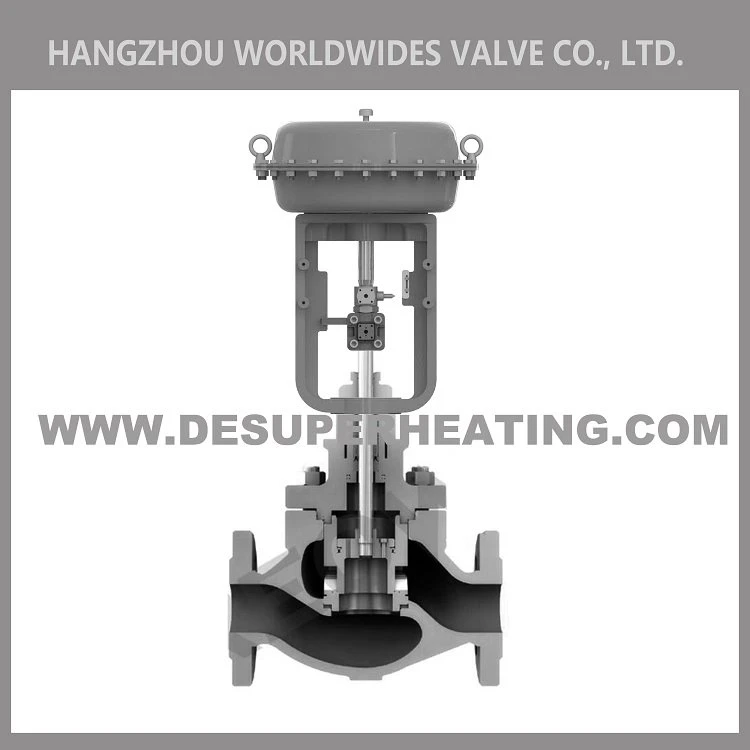
First off, let's understand what an Industry Control Valve is. An Industry Control Valve is a crucial component in industrial processes. It regulates the flow, pressure, temperature, and other variables in a system. These valves are used in a wide range of industries, from oil and gas to water treatment, and even in power generation.
Now, communication protocols are like the languages that these valves use to talk to other devices in the industrial control system. They ensure that the valve can receive commands and send back data accurately and efficiently. There are several communication protocols out there, and each has its own set of features and applications.
HART Protocol
One of the most popular protocols is the HART (Highway Addressable Remote Transducer) protocol. It's a hybrid protocol that combines analog and digital communication. The analog signal is used for the primary process variable, like flow or pressure, while the digital signal is used for additional information, such as valve status, diagnostics, and configuration.
The great thing about HART is that it's backward - compatible with existing 4 - 20 mA systems. This means that you can upgrade your system to use HART without having to replace all your wiring. It's also widely supported by many manufacturers, so you can easily integrate HART - enabled valves into your control system.
For example, if you have a Steam Pressure Reducing Valve using the HART protocol, you can monitor its pressure setpoint, actual pressure, and valve position. You can also perform diagnostic checks to see if there are any issues with the valve, like a stuck actuator or a faulty sensor.
Modbus Protocol
Another well - known protocol is Modbus. It's a serial communication protocol that's been around for a long time. Modbus is simple, easy to implement, and widely used in industrial automation. It allows devices to communicate over a serial line or Ethernet network.
There are two main types of Modbus: Modbus RTU (Remote Terminal Unit) and Modbus TCP. Modbus RTU is used for serial communication, usually over RS - 485 or RS - 232. Modbus TCP, on the other hand, is used for Ethernet - based communication.
With a Pneumatic Pressure Reducing Valve using Modbus, you can read and write data to the valve's registers. For instance, you can set the pressure setpoint, read the current pressure, and get information about the valve's open/close status. Modbus is great for applications where you need to quickly transfer data between devices in a network.
Profibus Protocol
Profibus is a fieldbus protocol that's commonly used in Europe. It's designed for high - speed communication between devices in an industrial control system. There are two main types of Profibus: Profibus DP (Decentralized Peripherals) and Profibus PA (Process Automation).
Profibus DP is used for fast communication between controllers and decentralized devices, such as valves and sensors. It has a high data transfer rate, which is important for real - time control applications. Profibus PA, on the other hand, is used for process automation applications, where safety and reliability are crucial.
If you're using an Industry Control Valve with Profibus, you can expect fast and reliable communication. The valve can receive commands from the controller quickly, and send back data about its status and performance in real - time.
Foundation Fieldbus
Foundation Fieldbus is another protocol that's designed for process automation. It's a digital, two - wire, multi - drop communication protocol that allows devices to communicate in a peer - to - peer manner. This means that devices can exchange data directly with each other without going through a central controller.
Foundation Fieldbus offers advanced features, such as function blocks, which allow you to implement complex control strategies directly in the field devices. It also provides a high level of diagnostic information, which can help you detect and troubleshoot problems quickly.
When it comes to choosing the right communication protocol for your Industry Control Valve, there are a few factors to consider. First, think about the existing infrastructure in your plant. If you already have a 4 - 20 mA system, HART might be a good choice because of its backward compatibility. If you have an Ethernet network, Modbus TCP or Profibus DP might be more suitable.

You also need to consider the requirements of your application. If you need high - speed communication and real - time control, protocols like Profibus DP or Foundation Fieldbus might be better. If you're looking for a simple and cost - effective solution, Modbus RTU could be the way to go.
In addition, the support from the valve manufacturer is also important. Make sure that the valve you choose is compatible with the protocol you want to use and that the manufacturer can provide technical support and documentation.
As a supplier of Industry Control Valves, we understand the importance of choosing the right communication protocol. We offer a wide range of valves that support different protocols, so you can find the perfect valve for your application. Whether you need a Steam Pressure Reducing Valve, a Pneumatic Pressure Reducing Valve, or any other type of Industry Control Valve, we've got you covered.
If you're interested in learning more about our products or need help choosing the right communication protocol for your valves, don't hesitate to get in touch. We're here to assist you with all your valve - related needs. Let's have a chat and see how we can improve your industrial control system together.
References:
- "Industrial Communication Technology Handbook" by Peter Harrop
- "Fieldbus Fundamentals" by H. Ronald Trout



