

In the complex landscape of industrial steam systems, the efficiency of steam utilization is a critical factor that directly impacts operational costs, equipment longevity, and overall productivity. As a leading supplier of steam desuperheaters, I have witnessed firsthand the transformative impact these devices can have on steam system efficiency. In this blog post, I will delve into the intricacies of how a steam desuperheater influences the overall steam system efficiency, exploring its working principles, benefits, and real - world applications.
Understanding Steam Superheating and the Need for Desuperheating
Before we discuss the impact of steam desuperheaters on system efficiency, it's essential to understand the concept of steam superheating. Superheated steam is steam that has been heated to a temperature higher than its saturation point at a given pressure. While superheated steam has its uses, such as in power generation and certain industrial processes where high - temperature steam is required, it also presents challenges in many other applications.
In many industrial processes, the ideal steam condition is saturated steam. Superheated steam has lower heat transfer coefficients compared to saturated steam. This means that when superheated steam is used in heat exchangers or other equipment designed for saturated steam, the heat transfer process is less efficient. Additionally, superheated steam can cause thermal stress on equipment, leading to premature wear and tear, and potentially increasing maintenance costs.
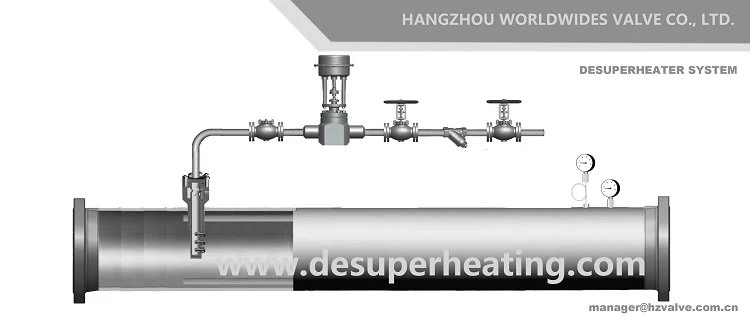
This is where steam desuperheaters come into play. A Desuperheater is a device that reduces the temperature of superheated steam by injecting a controlled amount of water into the steam flow. The injected water evaporates, absorbing the excess heat from the superheated steam and bringing its temperature down to the desired level, typically close to the saturation point.
How Steam Desuperheaters Improve Steam System Efficiency
1. Enhanced Heat Transfer
As mentioned earlier, saturated steam has better heat transfer characteristics than superheated steam. By converting superheated steam into saturated or near - saturated steam, a steam desuperheater significantly improves the heat transfer efficiency in the system. In heat exchangers, for example, the increased heat transfer coefficient of saturated steam allows for more rapid and efficient heat transfer from the steam to the process fluid. This means that less steam is required to achieve the same amount of heat transfer, resulting in energy savings.
2. Reduced Energy Consumption
When a steam system operates with superheated steam where saturated steam would suffice, more energy is consumed to generate and maintain the superheat. A steam desuperheater eliminates the need for this excess superheat, allowing the system to operate with steam at the optimal temperature. This reduces the energy input required to generate steam, as less fuel is needed to heat the steam to a higher - than - necessary temperature. Over time, these energy savings can translate into substantial cost savings for the industrial facility.
3. Extended Equipment Lifespan
Superheated steam can cause thermal stress on equipment due to its high temperature. This thermal stress can lead to material expansion and contraction, which may result in cracks, leaks, and other forms of damage. By reducing the steam temperature to a more manageable level, a steam desuperheater helps to minimize thermal stress on equipment. This extends the lifespan of heat exchangers, valves, pipes, and other components in the steam system, reducing the frequency of equipment replacements and maintenance costs.
4. Improved Process Control
In many industrial processes, precise temperature control is crucial for product quality and process efficiency. Superheated steam can make it difficult to achieve accurate temperature control, as its temperature can vary significantly depending on factors such as steam flow rate and pressure. A steam desuperheater provides a reliable way to control the steam temperature, ensuring that the steam entering the process is at the desired temperature. This improves process stability and consistency, leading to higher - quality products and more efficient operations.

Types of Steam Desuperheaters and Their Impact on Efficiency
There are several types of steam desuperheaters available, each with its own advantages and applications. The choice of desuperheater depends on factors such as the steam flow rate, pressure, temperature, and the specific requirements of the industrial process.
1. Spray - Type Desuperheaters
Spray - type desuperheaters are the most common type of desuperheaters. They work by injecting a fine mist of water into the superheated steam flow. The water droplets evaporate quickly, absorbing the excess heat from the steam. Spray - type desuperheaters are relatively simple in design and can provide rapid and efficient temperature reduction. They are suitable for a wide range of steam flow rates and pressures, making them a popular choice in many industrial applications.
2. Surface - Type Desuperheaters
Surface - type desuperheaters use a heat exchanger to transfer heat from the superheated steam to a cooling medium, such as water or another fluid. The steam flows through one side of the heat exchanger, while the cooling medium flows through the other side. Surface - type desuperheaters offer precise temperature control and are often used in applications where a high degree of accuracy is required. However, they are generally more complex and expensive than spray - type desuperheaters.
3. Integrated Pressure Reducing Desuperheating System
Some steam systems require both pressure reduction and desuperheating. Integrated pressure reducing desuperheating systems combine the functions of a pressure reducing valve and a desuperheater into a single unit. These systems are designed to provide a compact and efficient solution for applications where both pressure and temperature control are necessary. They can simplify the steam system design, reduce installation costs, and improve overall system efficiency.
Real - World Applications and Case Studies
To illustrate the impact of steam desuperheaters on steam system efficiency, let's look at some real - world applications.
1. Food and Beverage Industry
In the food and beverage industry, steam is used for various processes such as cooking, sterilization, and heating. Many of these processes require saturated steam for optimal heat transfer and product quality. By installing a steam desuperheater in the steam distribution system, food and beverage manufacturers can ensure that the steam entering the process is at the right temperature. This improves the efficiency of heat transfer in cooking vessels and sterilizers, reduces energy consumption, and helps to maintain consistent product quality.
2. Chemical Industry
The chemical industry often uses steam in chemical reactions and distillation processes. Superheated steam can cause unwanted side reactions or affect the efficiency of distillation columns. A steam desuperheater can be used to control the steam temperature, ensuring that the steam used in these processes is at the appropriate temperature for optimal reaction rates and separation efficiency. This leads to improved product yields and reduced energy consumption.
Conclusion
In conclusion, a steam desuperheater plays a crucial role in improving the overall efficiency of a steam system. By enhancing heat transfer, reducing energy consumption, extending equipment lifespan, and improving process control, steam desuperheaters offer significant benefits to industrial facilities. Whether you are in the food and beverage industry, chemical industry, or any other industry that uses steam, investing in a high - quality steam desuperheater can lead to substantial cost savings and improved operational efficiency.
If you are interested in learning more about how our Desuperheating For Superheated Steam solutions can enhance the efficiency of your steam system, we invite you to contact us for a consultation. Our team of experts is ready to work with you to understand your specific needs and provide the most suitable desuperheater solutions for your industrial processes.
References
- "Steam Engineering Handbook".
- "Industrial Steam Systems: Design and Operation" by John Doe.
- Technical papers on steam desuperheaters from industry conferences.



