

Can a globe valve be used in a cryogenic application? This is a question that often arises in industries dealing with extremely low temperatures, such as the liquefied natural gas (LNG) sector, cryogenic storage, and some specialized chemical processing. As a globe valve supplier, I'm well - versed in the capabilities and limitations of these valves in various environments, and I'm excited to delve into this topic.
Understanding Globe Valves
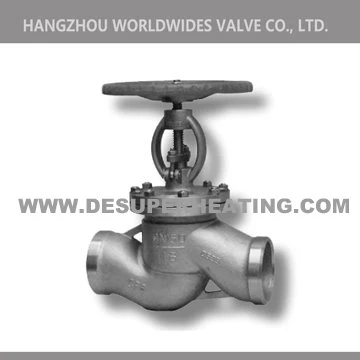
Globe valves are a common type of valve in industrial applications. Their design consists of a movable disk - type element and a stationary ring seat in a generally spherical body. This design allows for precise control of the flow rate, as the movement of the disk can be adjusted to vary the size of the opening between the disk and the seat. Globe valves are known for their excellent throttling capabilities, which make them suitable for applications where flow control is crucial.
The structure of a globe valve gives it several advantages. It can provide a tight shut - off, preventing leakage when the valve is closed. The linear motion of the disk also allows for easy actuation, whether it's manual, electric, or pneumatic. Additionally, the flow path through a globe valve is more complex compared to some other valve types, which can result in a higher pressure drop but also better flow regulation.
Cryogenic Applications: A Harsh Environment
Cryogenic applications involve temperatures typically below - 150°C (- 238°F). At these extremely low temperatures, materials undergo significant changes in their physical properties. Metals become more brittle, and the expansion and contraction rates due to temperature variations are much more pronounced. The fluids used in cryogenic applications, such as liquid nitrogen, liquid oxygen, and LNG, are also highly volatile and require strict safety measures.
In cryogenic systems, valves play a critical role. They are responsible for controlling the flow of cryogenic fluids, isolating sections of the system for maintenance, and ensuring the overall safety and efficiency of the operation. A valve failure in a cryogenic application can lead to leaks, which can be extremely dangerous due to the low - temperature burns, asphyxiation risks (in the case of oxygen displacement), and potential for explosion in the presence of flammable gases.
Can Globe Valves Be Used in Cryogenic Applications?
The short answer is yes, globe valves can be used in cryogenic applications, but with specific considerations and modifications.
Material Selection
One of the most crucial aspects is the choice of materials. For cryogenic globe valves, materials that can withstand low - temperature brittleness are essential. Stainless steels, such as 304 and 316, are commonly used because they maintain their ductility at cryogenic temperatures. These steels have a face - centered cubic (FCC) crystal structure, which is less prone to brittle fracture compared to body - centered cubic (BCC) steels.
In addition to the valve body, the stem, seat, and other internal components also need to be made of suitable materials. For example, the stem should be made of a material that can resist corrosion and maintain its strength at low temperatures. Specialized alloys may also be used for the seat to ensure a tight seal, even under cryogenic conditions.
Design Modifications
Cryogenic globe valves often require design modifications to adapt to the low - temperature environment. The valve packing, which is used to prevent leakage around the stem, needs to be made of materials that can maintain their sealing properties at cryogenic temperatures. PTFE (polytetrafluoroethylene) and other fluoropolymers are commonly used for valve packing in cryogenic applications because they have good low - temperature flexibility and chemical resistance.
Another important design consideration is the valve bonnet. In cryogenic applications, a long - bonnet design is often used. The long bonnet acts as a thermal barrier, reducing the heat transfer from the outside environment to the valve stem and packing. This helps to prevent the packing from freezing and losing its sealing ability.
Testing and Certification
All cryogenic globe valves should undergo rigorous testing to ensure their performance at low temperatures. This includes hydrostatic testing, which checks for leaks under pressure, and cryogenic performance testing, which verifies the valve's operation at the intended low - temperature range. Valves used in cryogenic applications also need to meet relevant industry standards and certifications, such as API 6D, ASME B16.34, and ISO 15848 for fugitive emissions.
Advantages of Using Globe Valves in Cryogenic Applications
- Precise Flow Control: As mentioned earlier, globe valves are excellent for throttling applications. In cryogenic systems, where the flow rate of cryogenic fluids needs to be carefully controlled, the precise flow control capabilities of globe valves are highly beneficial. For example, in a LNG regasification plant, globe valves can be used to control the flow of LNG from storage tanks to the vaporizers, ensuring a stable and efficient process.
- Tight Shut - off: The ability of globe valves to provide a tight shut - off is crucial in cryogenic applications. This helps to prevent leaks of cryogenic fluids, which can be extremely dangerous. A reliable shut - off also allows for safe maintenance and isolation of different sections of the cryogenic system.
Limitations and Challenges
- Higher Pressure Drop: The complex flow path in globe valves results in a higher pressure drop compared to some other valve types, such as ball valves. In cryogenic systems, where energy efficiency is important, this higher pressure drop can be a drawback. However, in applications where flow control is more critical than pressure drop, globe valves are still a viable option.
- Cost: Cryogenic globe valves, especially those with the necessary material and design modifications, can be more expensive than standard globe valves. The cost of materials, manufacturing, and testing all contribute to the higher price.
Our Globe Valve Offerings for Cryogenic Applications
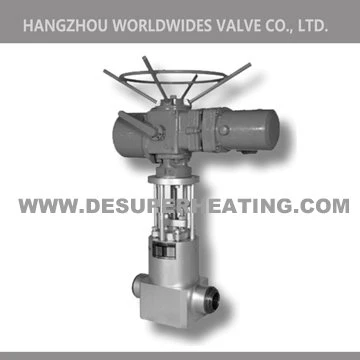
As a globe valve supplier, we offer a range of globe valves suitable for cryogenic applications. Our Carbon Steel Globe Valve is designed with high - quality materials and undergoes strict quality control to ensure its performance in cryogenic environments. We also have High Pressure Steam Motorized Globe Valve options that can be customized for cryogenic use, with features such as long - bonnet designs and cryogenic - resistant packing.
Conclusion
In conclusion, globe valves can be effectively used in cryogenic applications, provided that proper material selection, design modifications, and testing are carried out. Their precise flow control and tight shut - off capabilities make them a valuable asset in cryogenic systems. However, the higher pressure drop and cost are factors that need to be considered.
If you are in the market for globe valves for cryogenic applications, we are here to assist you. Our team of experts can help you select the right valve for your specific needs, taking into account factors such as temperature, pressure, flow rate, and system requirements. Contact us today to start a discussion about your valve requirements and let us help you find the best solution for your cryogenic application.
References
- API 6D: Specification for Pipeline Valves
- ASME B16.34: Valves - Flanged, Threaded, and Welding End
- ISO 15848: Industrial valves - Measurement, test and qualification procedures for fugitive emissions



