

Can a check valve be repaired? This is a question that many industrial professionals often ponder when dealing with the maintenance and longevity of their fluid control systems. As a check valve supplier, I've encountered this query numerous times, and I'm here to shed some light on the topic.
Understanding Check Valves
Before delving into the repair aspect, it's crucial to understand what check valves are and how they function. Check valves are mechanical devices designed to allow fluid (liquid or gas) to flow in one direction only. They play a vital role in preventing backflow, which can cause damage to pumps, compressors, and other equipment in a pipeline system.
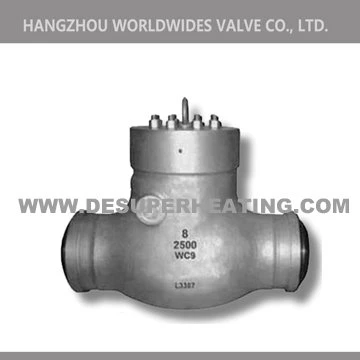
There are several types of check valves, including swing check valves, lift check valves, ball check valves, and diaphragm check valves. Each type has its unique design and operating principle, but they all share the common goal of ensuring unidirectional flow. For instance, a Swing Check Valve For Steam is commonly used in steam applications. It consists of a disc that swings on a hinge or shaft. When the fluid flows in the forward direction, the disc is pushed open, allowing the fluid to pass through. When the flow stops or reverses, the disc swings back to its closed position, preventing backflow.
Factors Affecting Repairability
The repairability of a check valve depends on several factors. The first and most obvious is the type of damage. Minor issues such as dirt or debris buildup, worn gaskets, or loose connections can often be repaired relatively easily. For example, if a check valve is not closing properly due to dirt in the seat, a simple cleaning can restore its functionality.
On the other hand, more severe damage such as cracked bodies, broken discs, or corroded internal components may make repair unfeasible. In some cases, the cost of repair may be so high that it is more economical to replace the valve altogether. Additionally, the age and availability of replacement parts can also impact the decision to repair or replace. Older valves may have obsolete parts that are difficult to source, making replacement a more practical option.
Common Repairs for Check Valves
Let's take a closer look at some of the common repairs that can be performed on check valves.
Cleaning
As mentioned earlier, dirt and debris can accumulate inside a check valve over time, causing it to malfunction. Cleaning the valve can often solve this problem. This involves disassembling the valve, removing the dirt and debris using a suitable cleaning agent, and then reassembling the valve. It's important to follow the manufacturer's instructions when cleaning a check valve to avoid damaging any components.
Gasket Replacement
Gaskets are used to create a seal between the different parts of a check valve. Over time, gaskets can wear out or become damaged, leading to leaks. Replacing the gaskets is a relatively simple repair that can be done by removing the old gaskets and installing new ones. It's essential to use the correct type and size of gaskets to ensure a proper seal.
Disc and Seat Refurbishment
The disc and seat are critical components of a check valve. They work together to control the flow of fluid and prevent backflow. If the disc or seat is damaged, it can affect the valve's performance. In some cases, the disc and seat can be refurbished by machining or grinding to restore their smooth surfaces. However, this requires specialized equipment and expertise.
Spring Replacement
Some check valves, such as lift check valves, use springs to assist in the closing process. If the spring becomes weak or broken, the valve may not close properly. Replacing the spring is a straightforward repair that can be done by removing the old spring and installing a new one.
The Repair Process
If you've determined that your check valve can be repaired, here's a general outline of the repair process.
- Inspection: The first step is to inspect the valve thoroughly to identify the cause of the problem. This may involve disassembling the valve and examining each component for damage.
- Disassembly: Once the problem has been identified, the valve needs to be disassembled. This should be done carefully to avoid damaging any components.
- Repair or Replacement: Depending on the type of damage, the damaged components can be repaired or replaced. For example, if a gasket is worn out, it can be replaced, or if a disc is cracked, it may need to be replaced.
- Cleaning: After the repair or replacement, all the components should be cleaned to remove any dirt or debris.
- Reassembly: The valve is then reassembled, making sure that all the components are properly aligned and tightened.
- Testing: Finally, the repaired valve should be tested to ensure that it is functioning correctly. This may involve applying pressure and checking for leaks or proper flow control.
When to Replace Instead of Repair
While check valves can often be repaired, there are situations where replacement is the better option. Here are some signs that it may be time to replace a check valve:
- Severe Damage: If the valve has extensive damage such as a cracked body, broken disc, or corroded internal components, repair may not be possible or cost-effective.
- Obsolete Parts: If the valve is old and replacement parts are no longer available, it may be necessary to replace the valve.
- Frequent Repairs: If a check valve requires frequent repairs, it may be a sign that it is reaching the end of its lifespan and should be replaced.
- Upgrading: In some cases, it may be beneficial to replace an old check valve with a newer, more advanced model to improve performance and efficiency.
Conclusion
In conclusion, the answer to the question "Can a check valve be repaired?" is yes, in many cases. Minor issues such as dirt buildup, worn gaskets, or loose connections can often be repaired relatively easily. However, more severe damage may make repair unfeasible or cost-effective, and replacement may be the better option.
As a check valve supplier, I understand the importance of providing high-quality valves and reliable repair services. If you're facing issues with your check valves or need advice on repair or replacement, I encourage you to reach out to me. We can discuss your specific needs and provide you with the best solution for your fluid control system. Whether you need a new check valve or assistance with repair, I'm here to help you make the right decision.
References
- Valve Handbook, by J. S. M. P. P. M.
- Industrial Valves: Selection, Installation, and Maintenance, by R. K. Sinha.



